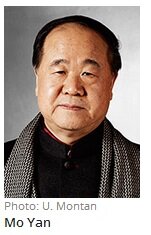
The Nobel Prize in Literature 2012 was awarded to Mo Yan "who with hallucinatory realism merges folk tales, history and the contemporary".
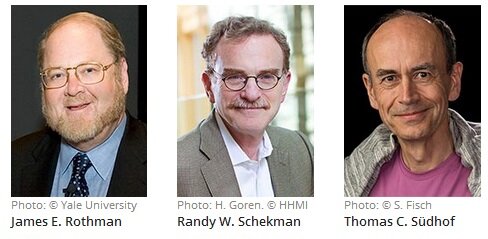
The Nobel Prize in Physiology or Medicine 2013 was awarded jointly to James E. Rothman, Randy W. Schekman and Thomas C. Südhof "for their discoveries of machinery regulating vesicle traffic, a major transport system in our cells".
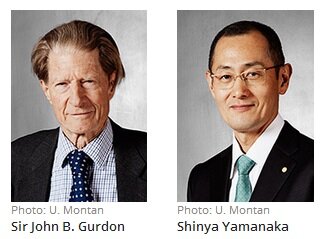
The Nobel Prize in Physiology or Medicine 2012 was awarded jointly to Sir John B. Gurdon and Shinya Yamanaka "for the discovery that mature cells can be reprogrammed to become pluripotent"
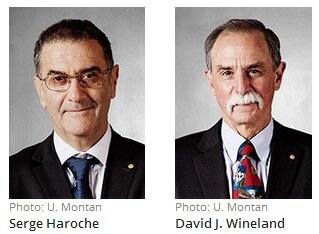
The Nobel Prize in Physics 2012 was awarded jointly to Serge Haroche and David J. Wineland "for ground-breaking experimental methods that enable measuring and manipulation of individual quantum systems"
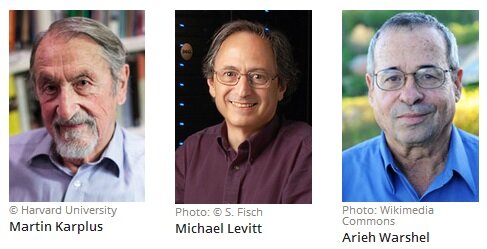
The Nobel Prize in Chemistry 2013 was awarded jointly to Martin Karplus, Michael Levitt and Arieh Warshel "for the development of multiscale models for complex chemical systems".
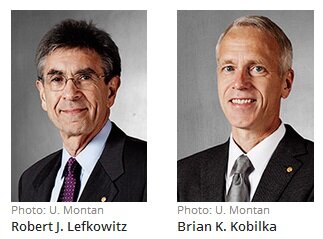
The Nobel Prize in Chemistry 2012 was awarded jointly to Robert J. Lefkowitz and Brian K. Kobilka "for studies of G-protein-coupled receptors"
The Nobel Prize in Literature 1990 was awarded to Octavio Paz "for impassioned writing with wide horizons, characterized by sensuous intelligence and humanistic integrity".
The Nobel Prize in Literature 2011 was awarded to Tomas Tranströmer "because, through his condensed, translucent images, he gives us fresh access to reality".
The Nobel Prize in Literature 2010 was awarded to Mario Vargas Llosa "for his cartography of structures of power and his trenchant images of the individual's resistance, revolt, and defeat".
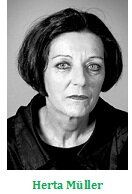
The Nobel Prize in Literature 2009 was awarded to Herta Müller "who, with the concentration of poetry and the frankness of prose, depicts the landscape of the dispossessed".
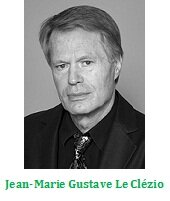
The Nobel Prize in Literature 2008 was awarded to Jean-Marie Gustave Le Clézio "author of new departures, poetic adventure and sensual ecstasy, explorer of a humanity beyond and below the reigning civilization".
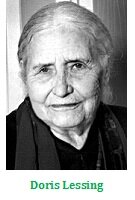
The Nobel Prize in Literature 2007 was awarded to Doris Lessing "that epicist of the female experience, who with scepticism, fire and visionary power has subjected a divided civilisation to scrutiny".
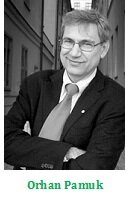
The Nobel Prize in Literature 2006 was awarded to Orhan Pamuk "who in the quest for the melancholic soul of his native city has discovered new symbols for the clash and interlacing of cultures".
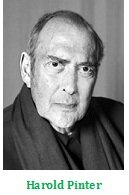
The Nobel Prize in Literature 2005 was awarded to Harold Pinter "who in his plays uncovers the precipice under everyday prattle and forces entry into oppression's closed rooms".
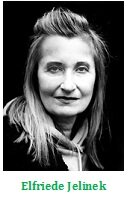
The Nobel Prize in Literature 2004 was awarded to Elfriede Jelinek "for her musical flow of voices and counter-voices in novels and plays that with extraordinary linguistic zeal reveal the absurdity of society's clichés and their subjugating power".
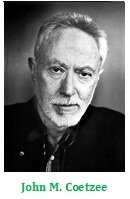
The Nobel Prize in Literature 2003 was awarded to J. M. Coetzee "who in innumerable guises portrays the surprising involvement of the outsider".
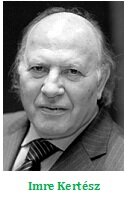
The Nobel Prize in Literature 2002 was awarded to Imre Kertész "for writing that upholds the fragile experience of the individual against the barbaric arbitrariness of history".
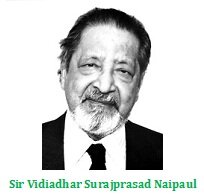
The Nobel Prize in Literature 2001 was awarded to V. S. Naipaul "for having united perceptive narrative and incorruptible scrutiny in works that compel us to see the presence of suppressed histories".
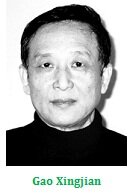
The Nobel Prize in Literature 2000 was awarded to Gao Xingjian "for an Å“uvre of universal validity, bitter insights and linguistic ingenuity, which has opened new paths for the Chinese novel and drama".
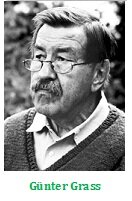
The Nobel Prize in Literature 1999 was awarded to Günter Grass "whose frolicsome black fables portray the forgotten face of history".
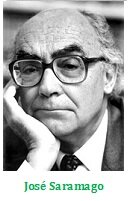
The Nobel Prize in Literature 1998 was awarded to José Saramago "who with parables sustained by imagination, compassion and irony continually enables us once again to apprehend an elusory reality".
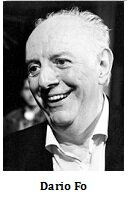
The Nobel Prize in Literature 1997 was awarded to Dario Fo "who emulates the jesters of the Middle Ages in scourging authority and upholding the dignity of the downtrodden".
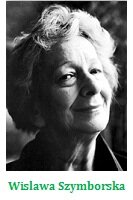
The Nobel Prize in Literature 1996 was awarded to Wislawa Szymborska "for poetry that with ironic precision allows the historical and biological context to come to light in fragments of human reality".
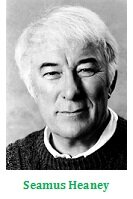
The Nobel Prize in Literature 1995 was awarded to Seamus Heaney "for works of lyrical beauty and ethical depth, which exalt everyday miracles and the living past".
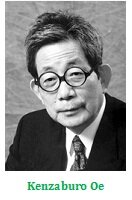
The Nobel Prize in Literature 1994 was awarded to Kenzaburo Oe "who with poetic force creates an imagined world, where life and myth condense to form a disconcerting picture of the human predicament today".
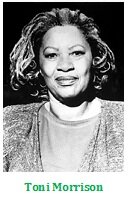
The Nobel Prize in Literature 1993 was awarded to Toni Morrison "who in novels characterized by visionary force and poetic import, gives life to an essential aspect of American reality".
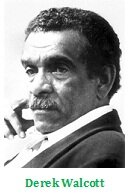
The Nobel Prize in Literature 1992 was awarded to Derek Walcott "for a poetic oeuvre of great luminosity, sustained by a historical vision, the outcome of a multicultural commitment".
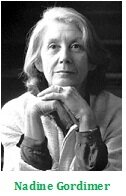
The Nobel Prize in Literature 1991 was awarded to Nadine Gordimer "who through her magnificent epic writing has - in the words of Alfred Nobel - been of very great benefit to humanity".
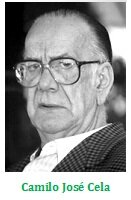
The Nobel Prize in Literature 1989 was awarded to Camilo José Cela "for a rich and intensive prose, which with restrained compassion forms a challenging vision of man's vulnerability".
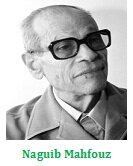
The Nobel Prize in Literature 1988 was awarded to Naguib Mahfouz "who, through works rich in nuance - now clear-sightedly realistic, now evocatively ambiguous - has formed an Arabian narrative art that applies to all mankind".
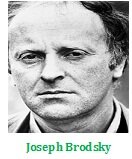
The Nobel Prize in Literature 1987 was awarded to Joseph Brodsky "for an all-embracing authorship, imbued with clarity of thought and poetic intensity".
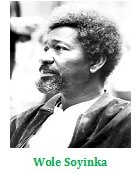
The Nobel Prize in Literature 1986 was awarded to Wole Soyinka "who in a wide cultural perspective and with poetic overtones fashions the drama of existence".
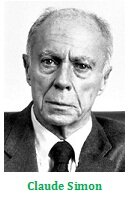
The Nobel Prize in Literature 1985 was awarded to Claude Simon "who in his novel combines the poet's and the painter's creativeness with a deepened awareness of time in the depiction of the human condition".
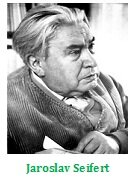
The Nobel Prize in Literature 1984 was awarded to Jaroslav Seifert "for his poetry which endowed with freshness, sensuality and rich inventiveness provides a liberating image of the indomitable spirit and versatility of man".
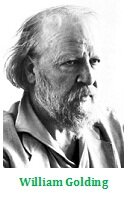
The Nobel Prize in Literature 1983 was awarded to William Golding "for his novels which, with the perspicuity of realistic narrative art and the diversity and universality of myth, illuminate the human condition in the world of today".
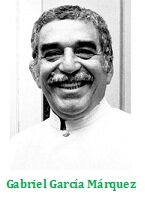
The Nobel Prize in Literature 1982 was awarded to Gabriel GarcÃa Márquez "for his novels and short stories, in which the fantastic and the realistic are combined in a richly composed world of imagination, reflecting a continent's life and conflicts".
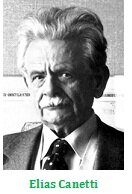
The Nobel Prize in Literature 1981 was awarded to Elias Canetti "for writings marked by a broad outlook, a wealth of ideas and artistic power".
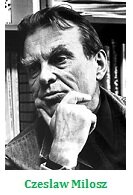
The Nobel Prize in Literature 1980 was awarded to Czeslaw Milosz "who with uncompromising clear-sightedness voices man's exposed condition in a world of severe conflicts".
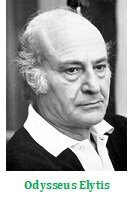
The Nobel Prize in Literature 1979 was awarded to Odysseus Elytis "for his poetry, which, against the background of Greek tradition, depicts with sensuous strength and intellectual clear-sightedness modern man's struggle for freedom and creativeness".
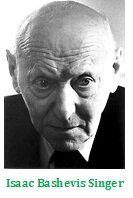
The Nobel Prize in Literature 1978 was awarded to Isaac Bashevis Singer "for his impassioned narrative art which, with roots in a Polish-Jewish cultural tradition, brings universal human conditions to life".
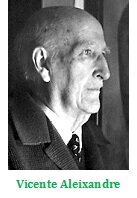
The Nobel Prize in Literature 1977 was awarded to Vicente Aleixandre "for a creative poetic writing which illuminates man's condition in the cosmos and in present-day society, at the same time representing the great renewal of the traditions of Spanish poetry between the wars".
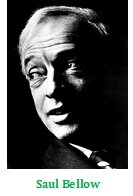
The Nobel Prize in Literature 1976 was awarded to Saul Bellow "for the human understanding and subtle analysis of contemporary culture that are combined in his work".
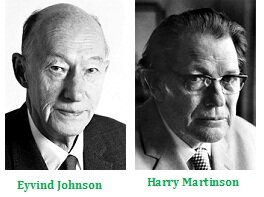
The Nobel Prize in Literature 1974 was divided equally between Eyvind Johnson "for a narrative art, far-seeing in lands and ages, in the service of freedom" and Harry Martinson "for writings that catch the dewdrop and reflect the cosmos".
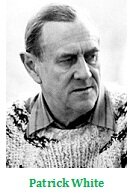
The Nobel Prize in Literature 1973 was awarded to Patrick White "for an epic and psychological narrative art which has introduced a new continent into literature".
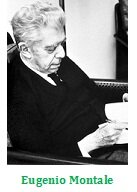
The Nobel Prize in Literature 1975 was awarded to Eugenio Montale "for his distinctive poetry which, with great artistic sensitivity, has interpreted human values under the sign of an outlook on life with no illusions".
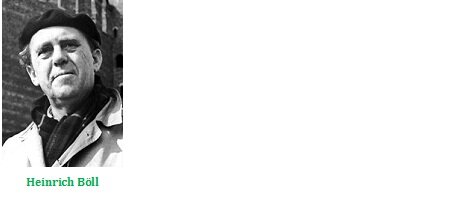
The Nobel Prize in Literature 1972 was awarded to Heinrich Böll "for his writing which through its combination of a broad perspective on his time and a sensitive skill in characterization has contributed to a renewal of German literature".
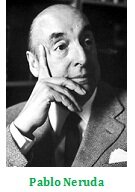
The Nobel Prize in Literature 1971 was awarded to Pablo Neruda "for a poetry that with the action of an elemental force brings alive a continent's destiny and dreams".
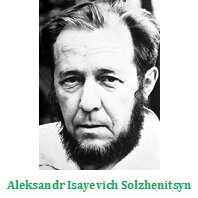
The Nobel Prize in Literature 1970 was awarded to Alexandr Solzhenitsyn "for the ethical force with which he has pursued the indispensable traditions of Russian literature".
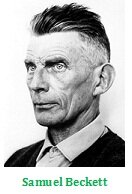
The Nobel Prize in Literature 1969 was awarded to Samuel Beckett "for his writing, which - in new forms for the novel and drama - in the destitution of modern man acquires its elevation".
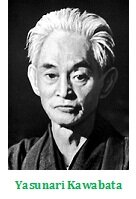
The Nobel Prize in Literature 1968 was awarded to Yasunari Kawabata "for his narrative mastery, which with great sensibility expresses the essence of the Japanese mind".
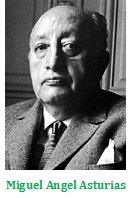
The Nobel Prize in Literature 1967 was awarded to Miguel Angel Asturias "for his vivid literary achievement, deep-rooted in the national traits and traditions of Indian peoples of Latin America".
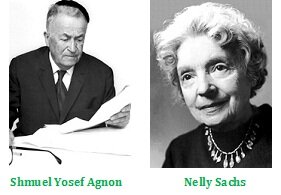
The Nobel Prize in Literature 1966 was divided equally between Shmuel Yosef Agnon "for his profoundly characteristic narrative art with motifs from the life of the Jewish people" and Nelly Sachs "for her outstanding lyrical and dramatic writing, which interprets Israel's destiny with touching strength" .
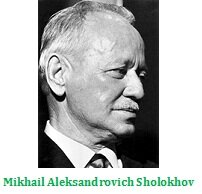
The Nobel Prize in Literature 1965 was awarded to Mikhail Sholokhov "for the artistic power and integrity with which, in his epic of the Don, he has given expression to a historic phase in the life of the Russian people".
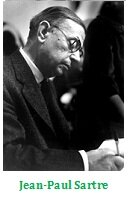
The Nobel Prize in Literature 1964 was awarded to Jean-Paul Sartre "for his work which, rich in ideas and filled with the spirit o20f freedom and the quest for truth, has exerted a far-reaching influence on our age".
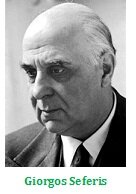
The Nobel Prize in Literature 1963 was awarded to Giorgos Seferis "for his eminent lyrical writing, inspired by a deep feeling for the Hellenic world of culture".
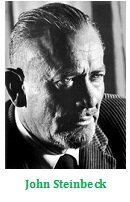
The Nobel Prize in Literature 1962 was awarded to John Steinbeck "for his realistic and imaginative writings, combining as they do sympathetic humour and keen social perception".
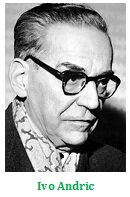
The Nobel Prize in Literature 1961 was awarded to Ivo Andric "for the epic force with which he has traced themes and depicted human destinies drawn from the history of his country".
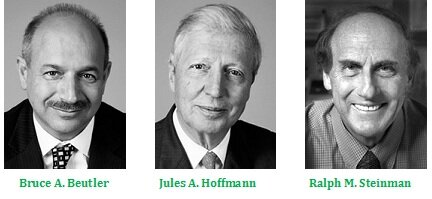
The Nobel Prize in Physiology or Medicine 2011 was divided, one half jointly to Bruce A. Beutler and Jules A. Hoffmann "for their discoveries concerning the activation of innate immunity" and the other half to Ralph M. Steinman "for his discovery of the dendritic cell and its role in adaptive immunity"
The Nobel Prize in Physiology or Medicine 2010 was awarded to Robert G. Edwards "for the development of in vitro fertilization".
The Nobel Prize in Physiology or Medicine 2009 was awarded jointly to Elizabeth H. Blackburn, Carol W. Greider and Jack W. Szostak "for the discovery of how chromosomes are protected by telomeres and the enzyme telomerase".
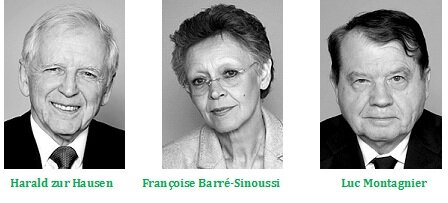
The Nobel Prize in Physiology or Medicine 2008 was divided, one half awarded to Harald zur Hausen "for his discovery of human papilloma viruses causing cervical cancer", the other half jointly to Françoise Barré-Sinoussi and Luc Montagnier"for their discovery of human immunodeficiency virus"
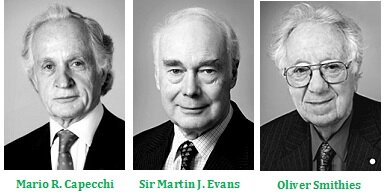
The Nobel Prize in Physiology or Medicine 2007 was awarded jointly to Mario R. Capecchi, Sir Martin J. Evans and Oliver Smithies "for their discoveries of principles for introducing specific gene modifications in mice by the use of embryonic stem cells".
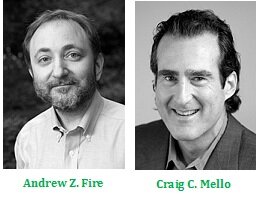
The Nobel Prize in Physiology or Medicine 2006 was awarded jointly to Andrew Z. Fire and Craig C. Mello "for their discovery of RNA interference - gene silencing by double-stranded RNA"
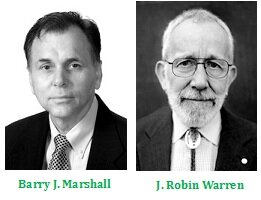
The Nobel Prize in Physiology or Medicine 2005 was awarded jointly to Barry J. Marshall and J. Robin Warren "for their discovery of the bacterium Helicobacter pylori and its role in gastritis and peptic ulcer disease"
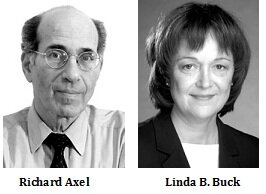
The Nobel Prize in Physiology or Medicine 2004 was awarded jointly to Richard Axel and Linda B. Buck "for their discoveries of odorant receptors and the organization of the olfactory system"
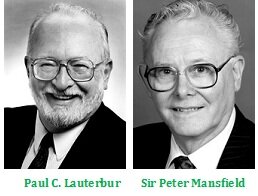
The Nobel Prize in Physiology or Medicine 2003 was awarded jointly to Paul C. Lauterbur and Sir Peter Mansfield "for their discoveries concerning magnetic resonance imaging
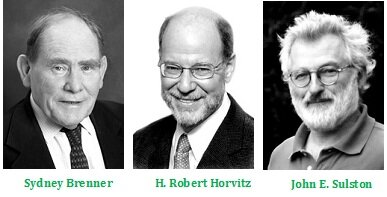
The Nobel Prize in Physiology or Medicine 2002 was awarded jointly to Sydney Brenner, H. Robert Horvitz and John E. Sulston "for their discoveries concerning genetic regulation of organ development and programmed cell death'"
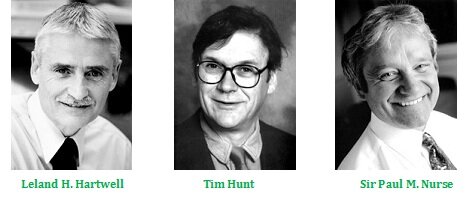
The Nobel Prize in Physiology or Medicine 2001 was awarded jointly to Leland H. Hartwell, Tim Hunt and Sir Paul M. Nurse "for their discoveries of key regulators of the cell cycle"
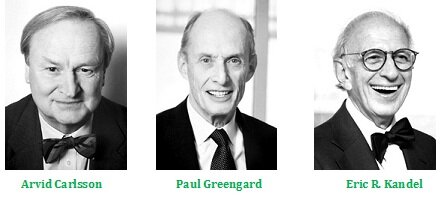
The Nobel Prize in Physiology or Medicine 2000 was awarded jointly to Arvid Carlsson, Paul Greengard and Eric R. Kandel "for their discoveries concerning signal transduction in the nervous system"
The Nobel Prize in Physiology or Medicine 1999 was awarded to Günter Blobel"for the discovery that proteins have intrinsic signals that govern their transport and localization in the cell"
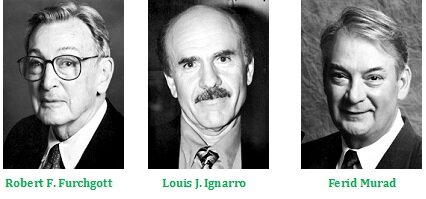
The Nobel Prize in Physiology or Medicine 1998 was awarded jointly to Robert F. Furchgott, Louis J. Ignarro and Ferid Murad "for their discoveries concerning nitric oxide as a signalling molecule in the cardiovascular system"
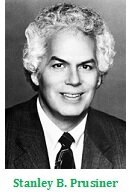
The Nobel Prize in Physiology or Medicine 1997 was awarded to Stanley B. Prusiner "for his discovery of Prions - a new biological principle of infection".
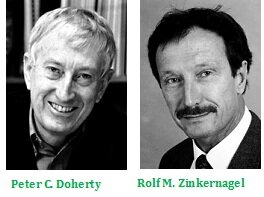
The Nobel Prize in Physiology or Medicine 1996 was awarded jointly to Peter C. Doherty and Rolf M. Zinkernagel "for their discoveries concerning the specificity of the cell mediated immune defence"
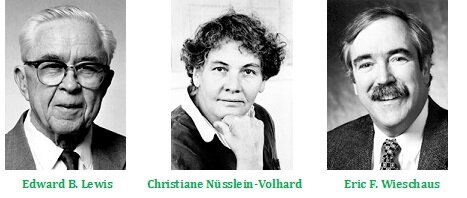
The Nobel Prize in Physiology or Medicine 1995 was awarded jointly to Edward B. Lewis, Christiane Nüsslein-Volhard and Eric F. Wieschaus "for their discoveries concerning the genetic control of early embryonic development"
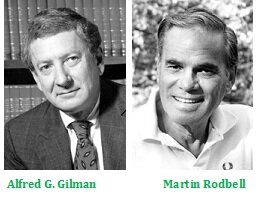
The Nobel Prize in Physiology or Medicine 1994 was awarded jointly to Alfred G. Gilman and Martin Rodbell "for their discovery of G-proteins and the role of these proteins in signal transduction in cells"
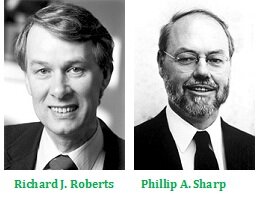
The Nobel Prize in Physiology or Medicine 1993 was awarded jointly to Richard J. Roberts and Phillip A. Sharp "for their discoveries of split genes"
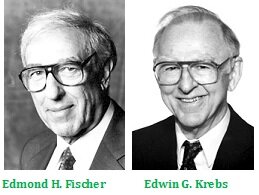
The Nobel Prize in Physiology or Medicine 1992 was awarded jointly to Edmond H. Fischer and Edwin G. Krebs "for their discoveries concerning reversible protein phosphorylation as a biological regulatory mechanism"
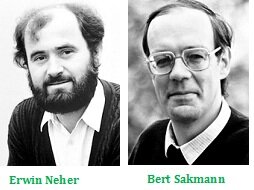
The Nobel Prize in Physiology or Medicine 1991 was awarded jointly to Erwin Neher and Bert Sakmann "for their discoveries concerning the function of single ion channels in cells"
The Nobel Prize in Physiology or Medicine 1990 was awarded jointly to Joseph E. Murray and E. Donnall Thomas "for their discoveries concerning organ and cell transplantation in the treatment of human disease
The Nobel Prize in Physiology or Medicine 1989 was awarded jointly to J. Michael Bishop and Harold E. Varmus "for their discovery of the cellular origin of retroviral oncogenes"
The Nobel Prize in Physiology or Medicine 1988 was awarded jointly to Sir James W. Black, Gertrude B. Elion and George H. Hitchings "for their discoveries of important principles for drug treatment".
The Nobel Prize in Physiology or Medicine 1987 was awarded to Susumu Tonegawa "for his discovery of the genetic principle for generation of antibody diversity".
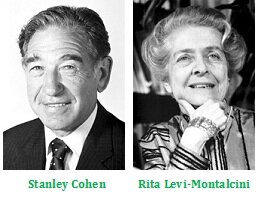
The Nobel Prize in Physiology or Medicine 1986 was awarded jointly to Stanley Cohen and Rita Levi-Montalcini "for their discoveries of growth factors"
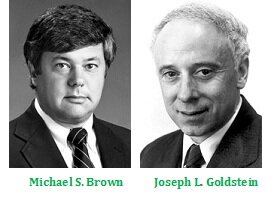
The Nobel Prize in Physiology or Medicine 1985 was awarded jointly to Michael S. Brown and Joseph L. Goldstein "for their discoveries concerning the regulation of cholesterol metabolism"
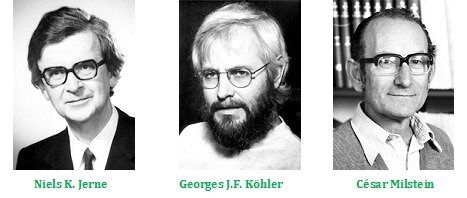
The Nobel Prize in Physiology or Medicine 1984 was awarded jointly to Niels K. Jerne, Georges J.F. Köhler and César Milstein "for theories concerning the specificity in development and control of the immune system and the discovery of the principle for production of monoclonal antibodies".
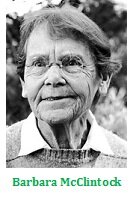
The Nobel Prize in Physiology or Medicine 1983 was awarded to Barbara McClintock "for her discovery of mobile genetic elements".
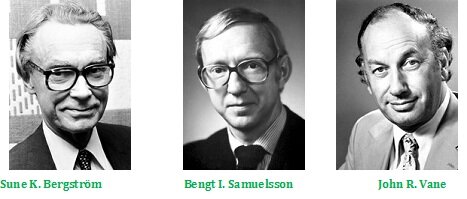
The Nobel Prize in Physiology or Medicine 1982 was awarded jointly to Sune K. Bergström, Bengt I. Samuelsson and John R. Vane "for their discoveries concerning prostaglandins and related biologically active substances".
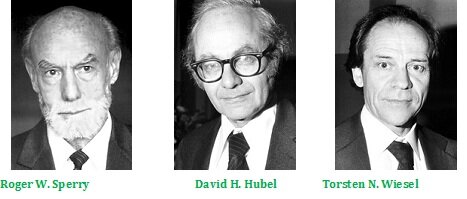
The Nobel Prize in Physiology or Medicine 1981 was divided, one half awarded to Roger W. Sperry "for his discoveries concerning the functional specialization of the cerebral hemispheres", the other half jointly to David H. Hubel and Torsten N. Wiesel "for their discoveries concerning information processing in the visual system".
The Nobel Prize in Physiology or Medicine 1980 was awarded jointly to Baruj Benacerraf, Jean Dausset and George D. Snell "for their discoveries concerning genetically determined structures on the cell surface that regulate immunological reactions"
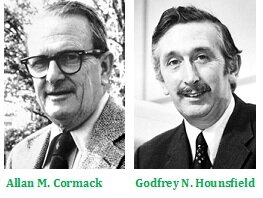
The Nobel Prize in Physiology or Medicine 1979 was awarded jointly to Allan M. Cormack and Godfrey N. Hounsfield "for the development of computer assisted tomography"
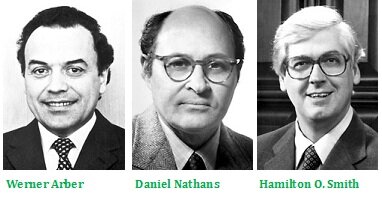
The Nobel Prize in Physiology or Medicine 1978 was awarded jointly to Werner Arber, Daniel Nathans and Hamilton O. Smith "for the discovery of restriction enzymes and their application to problems of molecular genetics"
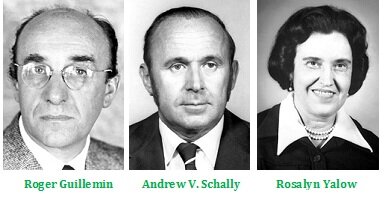
The Nobel Prize in Physiology or Medicine 1977 was divided, one half jointly to Roger Guillemin and Andrew V. Schally "for their discoveries concerning the peptide hormone production of the brain" and the other half to Rosalyn Yalow "for the development of radioimmunoassays of peptide hormones"
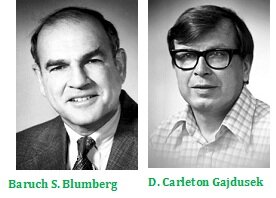
The Nobel Prize in Physiology or Medicine 1976 was awarded jointly to Baruch S. Blumberg and D. Carleton Gajdusek "for their discoveries concerning new mechanisms for the origin and dissemination of infectious diseases"
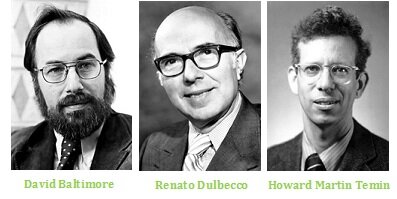
The Nobel Prize in Physiology or Medicine 1975 was awarded jointly to David Baltimore, Renato Dulbecco and Howard Martin Temin "for their discoveries concerning the interaction between tumour viruses and the genetic material of the cell"
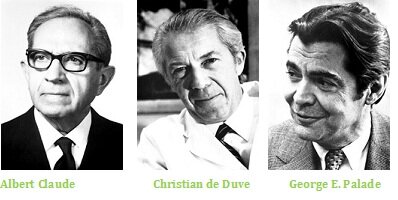
The Nobel Prize in Physiology or Medicine 1974 was awarded jointly to Albert Claude, Christian de Duve and George E. Palade "for their discoveries concerning the structural and functional organization of the cell"
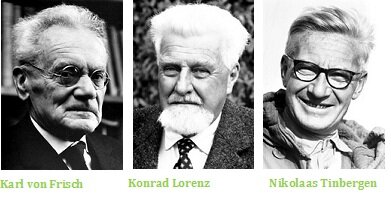
The Nobel Prize in Physiology or Medicine 1973 was awarded jointly to Karl von Frisch, Konrad Lorenz and Nikolaas Tinbergen "for their discoveries concerning organization and elicitation of individual and social behaviour patterns".
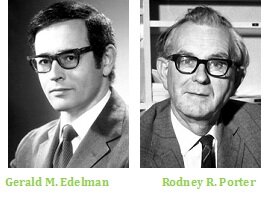
The Nobel Prize in Physiology or Medicine 1972 was awarded jointly to Gerald M. Edelman and Rodney R. Porter "for their discoveries concerning the chemical structure of antibodies"
The Nobel Prize in Physiology or Medicine 1971 was awarded to Earl W. Sutherland, Jr. "for his discoveries concerning the mechanisms of the action of hormones".
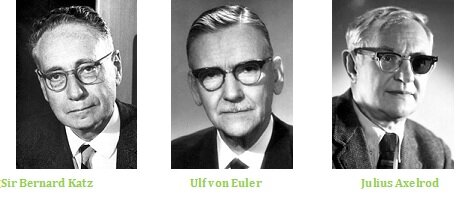
The Nobel Prize in Physiology or Medicine 1970 was awarded jointly to Sir Bernard Katz, Ulf von Euler and Julius Axelrod "for their discoveries concerning the humoral transmittors in the nerve terminals and the mechanism for their storage, release and inactivation"
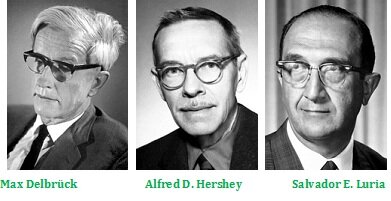
The Nobel Prize in Physiology or Medicine 1969 was awarded jointly to Max Delbrück, Alfred D. Hershey and Salvador E. Luria "for their discoveries concerning the replication mechanism and the genetic structure of viruses"
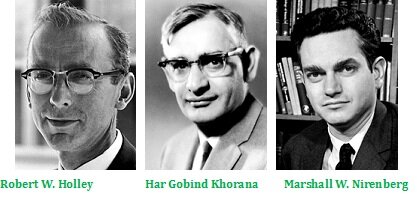
The Nobel Prize in Physiology or Medicine 1968 was awarded jointly to Robert W. Holley, Har Gobind Khorana and Marshall W. Nirenberg "for their interpretation of the genetic code and its function in protein synthesis"
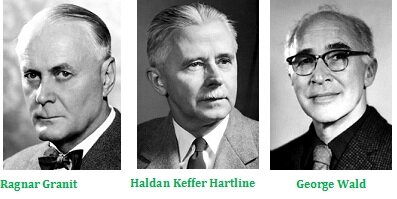
The Nobel Prize in Physiology or Medicine 1967 was awarded jointly to Ragnar Granit, Haldan Keffer Hartline and George Wald "for their discoveries concerning the primary physiological and chemical visual processes in the eye"
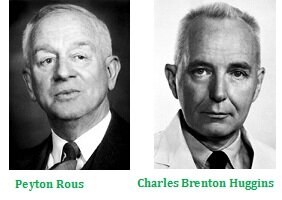
The Nobel Prize in Physiology or Medicine 1966 was divided equally between Peyton Rous "for his discovery of tumour-inducing viruses" and Charles Brenton Huggins "for his discoveries concerning hormonal treatment of prostatic cancer"
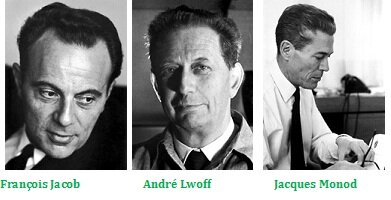
The Nobel Prize in Physiology or Medicine 1965 was awarded jointly to François Jacob, André Lwoff and Jacques Monod "for their discoveries concerning genetic control of enzyme and virus synthesis".
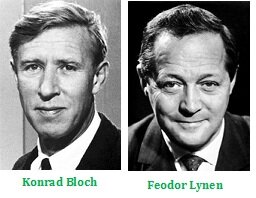
The Nobel Prize in Physiology or Medicine 1964 was awarded jointly to Konrad Bloch and Feodor Lynen "for their discoveries concerning the mechanism and regulation of the cholesterol and fatty acid metabolism"
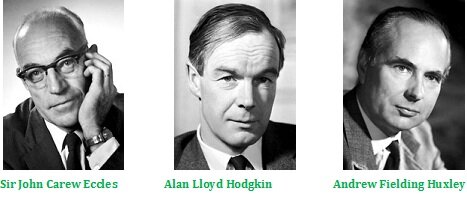
The Nobel Prize in Physiology or Medicine 1963 was awarded jointly to Sir John Carew Eccles, Alan Lloyd Hodgkin and Andrew Fielding Huxley "for their discoveries concerning the ionic mechanisms involved in excitation and inhibition in the peripheral and central portions of the nerve cell membrane"
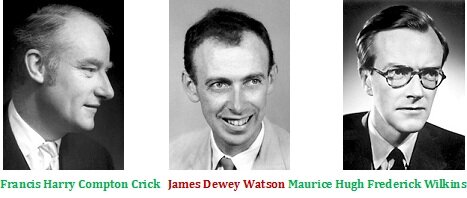
The Nobel Prize in Physiology or Medicine 1962 was awarded jointly to Francis Harry Compton Crick, James Dewey Watson and Maurice Hugh Frederick Wilkins"for their discoveries concerning the molecular structure of nucleic acids and its significance for information transfer in living material
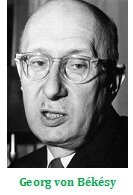
The Nobel Prize in Physiology or Medicine 1961 was awarded to Georg von Békésy "for his discoveries of the physical mechanism of stimulation within the cochlea".
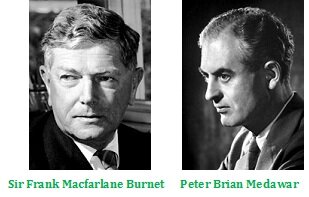
The Nobel Prize in Physiology or Medicine 1960 was awarded jointly to Sir Frank Macfarlane Burnet and Peter Brian Medawar "for discovery of acquired immunological tolerance"
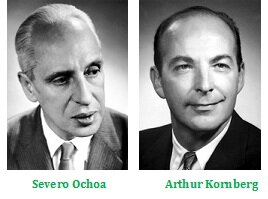
The Nobel Prize in Physiology or Medicine 1959 was awarded jointly to Severo Ochoa and Arthur Kornberg "for their discovery of the mechanisms in the biological synthesis of ribonucleic acid and deoxyribonucleic acid"
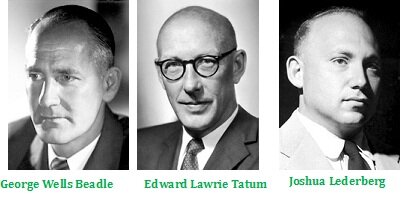
The Nobel Prize in Physiology or Medicine 1958 was divided, one half jointly to George Wells Beadle and Edward Lawrie Tatum "for their discovery that genes act by regulating definite chemical events" and the other half to Joshua Lederberg"for his discoveries concerning genetic recombination and the organization of the genetic material of bacteria"
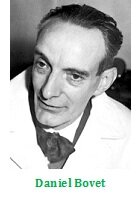
The Nobel Prize in Physiology or Medicine 1957 was awarded to Daniel Bovet "for his discoveries relating to synthetic compounds that inhibit the action of certain body substances, and especially their action on the vascular system and the skeletal muscles"
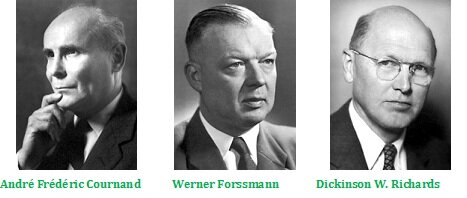
The Nobel Prize in Physiology or Medicine 1956 was awarded jointly to André Frédéric Cournand, Werner Forssmann and Dickinson W. Richards "for their discoveries concerning heart catheterization and pathological changes in the circulatory system".
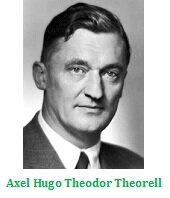
The Nobel Prize in Physiology or Medicine 1955 was awarded to Hugo Theorell"for his discoveries concerning the nature and mode of action of oxidation enzymes".
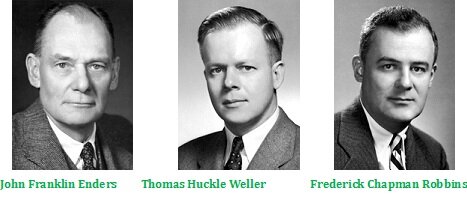
The Nobel Prize in Physiology or Medicine 1954 was awarded jointly to John Franklin Enders, Thomas Huckle Weller and Frederick Chapman Robbins "for their discovery of the ability of poliomyelitis viruses to grow in cultures of various types of tissue".
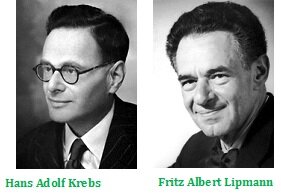
The Nobel Prize in Physiology or Medicine 1953 was divided equally between Hans Adolf Krebs "for his discovery of the citric acid cycle" and Fritz Albert Lipmann "for his discovery of co-enzyme A and its importance for intermediary metabolism"
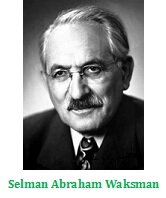
The Nobel Prize in Physiology or Medicine 1952 was awarded to Selman A. Waksman "for his discovery of streptomycin, the first antibiotic effective against tuberculosis".
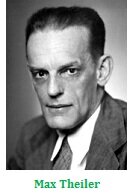
The Nobel Prize in Physiology or Medicine 1951 was awarded to Max Theiler "for his discoveries concerning yellow fever and how to combat it"
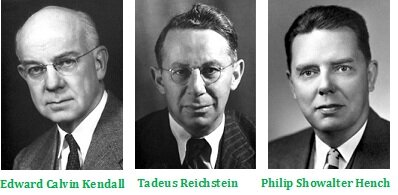
The Nobel Prize in Physiology or Medicine 1950 was awarded jointly to Edward Calvin Kendall, Tadeus Reichstein and Philip Showalter Hench "for their discoveries relating to the hormones of the adrenal cortex, their structure and biological effects"
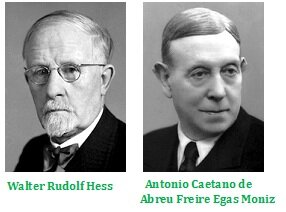
The Nobel Prize in Physiology or Medicine 1949 was divided equally between Walter Rudolf Hess "for his discovery of the functional organization of the interbrain as a coordinator of the activities of the internal organs" and Antonio Caetano de Abreu Freire Egas Moniz "for his discovery of the therapeutic value of leucotomy in certain psychoses"
The Nobel Prize in Physiology or Medicine 1948 was awarded to Paul Müller "for his discovery of the high efficiency of DDT as a contact poison against several arthropods".
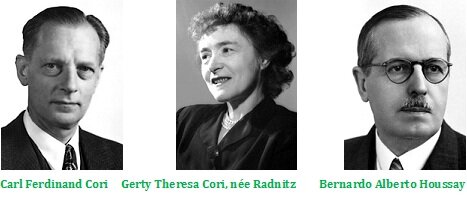
The Nobel Prize in Physiology or Medicine 1947 was divided, one half jointly to Carl Ferdinand Cori and Gerty Theresa Cori, née Radnitz "for their discovery of the course of the catalytic conversion of glycogen" and the other half to Bernardo Alberto Houssay "for his discovery of the part played by the hormone of the anterior pituitary lobe in the metabolism of sugar"
The Nobel Prize in Physiology or Medicine 1946 was awarded to Hermann J. Muller "for the discovery of the production of mutations by means of X-ray irradiation"
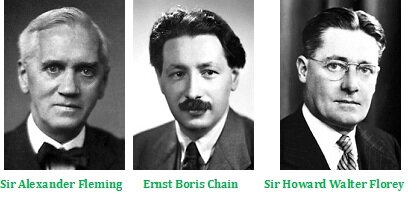
The Nobel Prize in Physiology or Medicine 1945 was awarded jointly to Sir Alexander Fleming, Ernst Boris Chain and Sir Howard Walter Florey "for the discovery of penicillin and its curative effect in various infectious diseases"
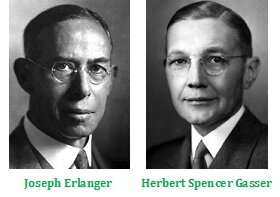
The Nobel Prize in Physiology or Medicine 1944 was awarded jointly to Joseph Erlanger and Herbert Spencer Gasser "for their discoveries relating to the highly differentiated functions of single nerve fibres"
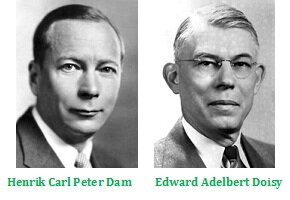
The Nobel Prize in Physiology or Medicine 1943 was divided equally between Henrik Carl Peter Dam "for his discovery of vitamin K" and Edward Adelbert Doisy"for his discovery of the chemical nature of vitamin K"
No Nobel Prize was awarded this year. The prize money was allocated to the Special Fund of this prize section.
No Nobel Prize was awarded this year. The prize money was allocated to the Special Fund of this prize section.
No Nobel Prize was awarded this year. The prize money was allocated to the Special Fund of this prize section.
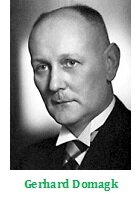
The Nobel Prize in Physiology or Medicine 1939 was awarded to Gerhard Domagk"for the discovery of the antibacterial effects of prontosil".
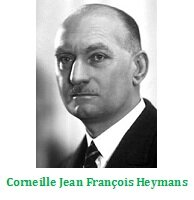
The Nobel Prize in Physiology or Medicine 1938 was awarded to Corneille Heymans "for the discovery of the role played by the sinus and aortic mechanisms in the regulation of respiration".
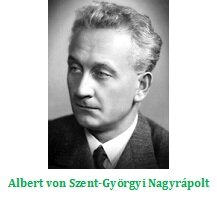
The Nobel Prize in Physiology or Medicine 1937 was awarded to Albert Szent-Györgyi "for his discoveries in connection with the biological combustion processes, with special reference to vitamin C and the catalysis of fumaric acid"
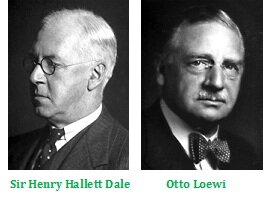
The Nobel Prize in Physiology or Medicine 1936 was awarded jointly to Sir Henry Hallett Dale and Otto Loewi "for their discoveries relating to chemical transmission of nerve impulses"
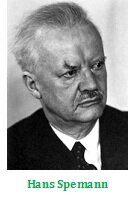
The Nobel Prize in Physiology or Medicine 1935 was awarded to Hans Spemann"for his discovery of the organizer effect in embryonic development".
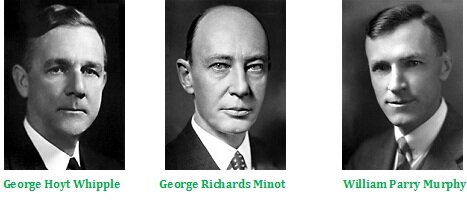
The Nobel Prize in Physiology or Medicine 1934 was awarded jointly to George Hoyt Whipple, George Richards Minot and William Parry Murphy "for their discoveries concerning liver therapy in cases of anaemia".
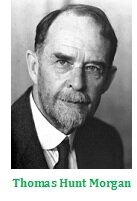
The Nobel Prize in Physiology or Medicine 1933 was awarded to Thom as H. Morgan "for his discoveries concerning the role played by the chromosome in heredity"
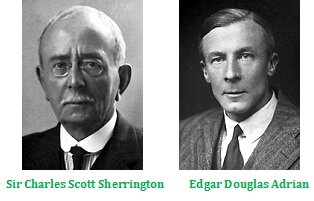
The Nobel Prize in Physiology or Medicine 1932 was awarded jointly to Sir Charles Scott Sherrington and Edgar Douglas Adrian "for their discoveries regarding the functions of neurons"
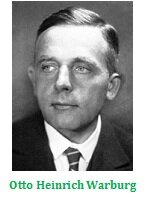
The Nobel Prize in Physiology or Medicine 1931 was awarded to Otto Warburg" for his discovery of the nature and mode of action of the respiratory enzyme"
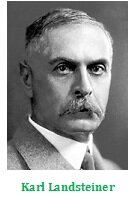
The Nobel Prize in Physiology or Medicine 1930 was awarded to Karl Landsteiner"for his discovery of human blood groups".
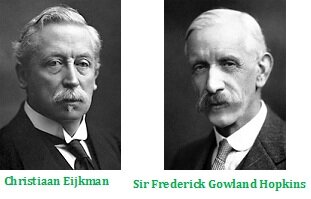
The Nobel Prize in Physiology or Medicine 1929 was divided equally between Christiaan Eijkman "for his discovery of the antineuritic vitamin" and Sir Frederick Gowland Hopkins "for his discovery of the growth-stimulating vitamins".
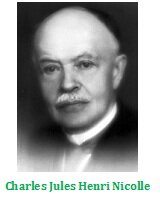
The Nobel Prize in Physiology or Medicine 1928 was awarded to Charles Nicolle"for his work on typhus".
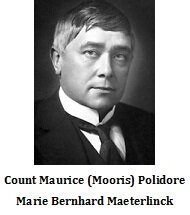
The Nobel Prize in Literature 1911 was awarded to Maurice Maeterlinck "in appreciation of his many-sided literary activities, and especially of his dramatic works, which are distinguished by a wealth of imagination and by a poetic fancy, which reveals, sometimes in the guise of a fairy tale, a deep inspiration, while in a mysterious way they appeal to the readers' own feelings and stimulate their imaginations".
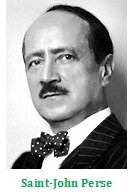
The Nobel Prize in Literature 1960 was awarded to Saint-John Perse "for the soaring flight and the evocative imagery of his poetry which in a visionary fashion reflects the conditions of our time".
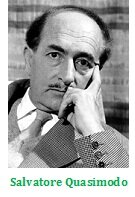
The Nobel Prize in Literature 1959 was awarded to Salvatore Quasimodo "for his lyrical poetry, which with classical fire expresses the tragic experience of life in our own times".
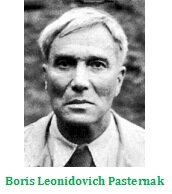
The Nobel Prize in Literature 1958 was awarded to Boris Pasternak "for his important achievement both in contemporary lyrical poetry and in the field of the great Russian epic tradition".
The Nobel Prize in Literature 1957 was awarded to Albert Camus "for his important literary production, which with clear-sighted earnestness illuminates the problems of the human conscience in our times".
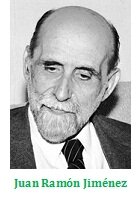
The Nobel Prize in Literature 1956 was awarded to Juan Ramón Jiménez "for his lyrical poetry, which in Spanish language constitutes an example of high spirit and artistical purity".
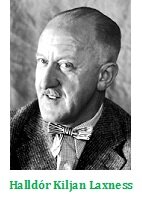
The Nobel Prize in Literature 1955 was awarded to Halldór Laxness "for his vivid epic power which has renewed the great narrative art of Iceland".
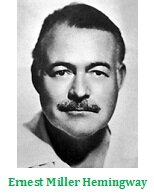
The Nobel Prize in Literature 1954 was awarded to Ernest Hemingway "for his mastery of the art of narrative, most recently demonstrated in The Old Man and the Sea, and for the influence that he has exerted on contemporary style".
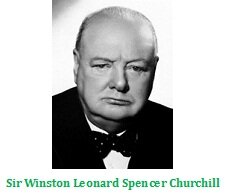
The Nobel Prize in Literature 1953 was awarded to Winston Churchill "for his mastery of historical and biographical description as well as for brilliant oratory in defending exalted human values".
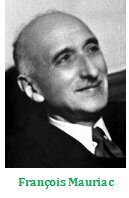
The Nobel Prize in Literature 1952 was awarded to François Mauriac "for the deep spiritual insight and the artistic intensity with which he has in his novels penetrated the drama of human life".
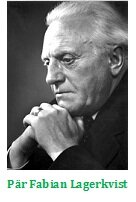
The Nobel Prize in Literature 1951 was awarded to Pär Lagerkvist "for the artistic vigour and true independence of mind with which he endeavours in his poetry to find answers to the eternal questions confronting mankind".
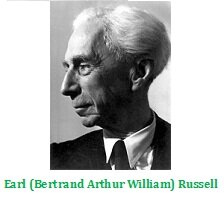
The Nobel Prize in Literature 1950 was awarded to Bertrand Russell "in recognition of his varied and significant writings in which he champions humanitarian ideals and freedom of thought".
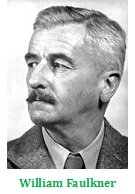
The Nobel Prize in Literature 1949 was awarded to William Faulkner "for his powerful and artistically unique contribution to the modern American novel".
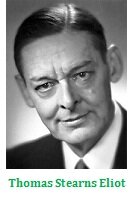
The Nobel Prize in Literature 1948 was awarded to T.S. Eliot "for his outstanding, pioneer contribution to present-day poetry".
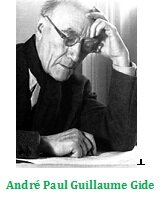
The Nobel Prize in Literature 1947 was awarded to André Gide "for his comprehensive and artistically significant writings, in which human problems and conditions have been presented with a fearless love of truth and keen psychological insight".
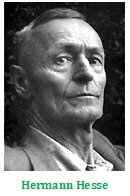
The Nobel Prize in Literature 1946 was awarded to Hermann Hesse "for his inspired writings which, while growing in boldness and penetration, exemplify the classical humanitarian ideals and high qualities of style".
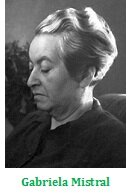
The Nobel Prize in Literature 1945 was awarded to Gabriela Mistral "for her lyric poetry which, inspired by powerful emotions, has made her name a symbol of the idealistic aspirations of the entire Latin American world"
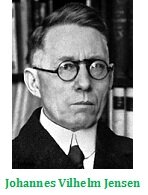
The Nobel Prize in Literature 1944 was awarded to Johannes V. Jensen "for the rare strength and fertility of his poetic imagination with which is combined an intellectual curiosity of wide scope and a bold, freshly creative style".
No Nobel Prize was awarded this year. The prize money was allocated to the Special Fund of this prize section.
No Nobel Prize was awarded this year. The prize money was allocated to the Special Fund of this prize section.
No Nobel Prize was awarded this year. The prize money was allocated to the Special Fund of this prize section.
No Nobel Prize was awarded this year. The prize money was allocated to the Special Fund of this prize section.
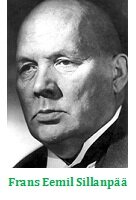
The Nobel Prize in Literature 1939 was awarded to Frans Eemil Sillanpää "for his deep understanding of his country's peasantry and the exquisite art with which he has portrayed their way of life and their relationship with Nature".
The Nobel Prize in Literature 1938 was awarded to Pearl Buck "for her rich and truly epic descriptions of peasant life in China and for her biographical masterpieces".
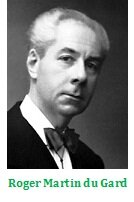
The Nobel Prize in Literature 1937 was awarded to Roger Martin du Gard "for the artistic power and truth with which he has depicted human conflict as well as some fundamental aspects of contemporary life in his novel-cycle Les Thibault".
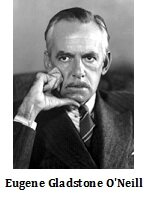
The Nobel Prize in Literature 1936 was awarded to Eugene O'Neill "for the power, honesty and deep-felt emotions of his dramatic works, which embody an original concept of tragedy".
No Nobel Prize was awarded this year. The prize money was allocated to the Special Fund of this prize section.
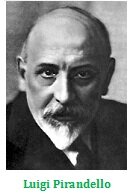
The Nobel Prize in Literature 1934 was awarded to Luigi Pirandello "for his bold and ingenious revival of dramatic and scenic art".
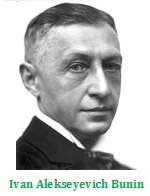
The Nobel Prize in Literature 1933 was awarded to Ivan Bunin "for the strict artistry with which he has carried on the classical Russian traditions in prose writing".
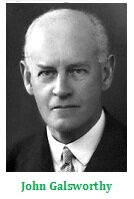
The Nobel Prize in Literature 1932 was awarded to John Galsworthy "for his distinguished art of narration which takes its highest form in The Forsyte Saga".
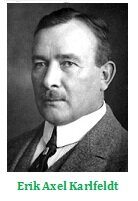
The Nobel Prize in Literature 1931 was awarded to Erik Axel Karlfeldt "The poetry of Erik Axel Karlfeldt".
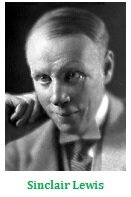
The Nobel Prize in Literature 1930 was awarded to Sinclair Lewis "for his vigorous and graphic art of description and his ability to create, with wit and humour, new types of characters".
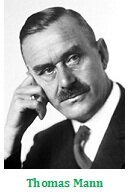
The Nobel Prize in Literature 1929 was awarded to Thomas Mann "principally for his great novel, Buddenbrooks, which has won steadily increased recognition as one of the classic works of contemporary literature".
The Nobel Prize in Literature 1928 was awarded to Sigrid Undset "principally for her powerful descriptions of Northern life during the Middle Ages".
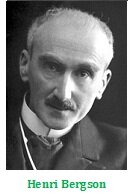
The Nobel Prize in Literature 1927 was awarded to Henri Bergson "in recognition of his rich and vitalizing ideas and the brillant skill with which they have been presented".
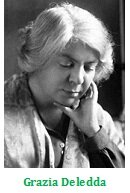
The Nobel Prize in Literature 1926 was awarded to Grazia Deledda "for her idealistically inspired writings which with plastic clarity picture the life on her native island and with depth and sympathy deal with human problems in general".
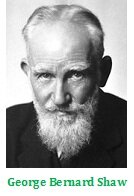
The Nobel Prize in Literature 1925 was awarded to George Bernard Shaw "for his work which is marked by both idealism and humanity, its stimulating satire often being infused with a singular poetic beauty".
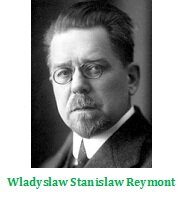
The Nobel Prize in Literature 1924 was awarded to Wladyslaw Reymont "for his great national epic, The Peasants".
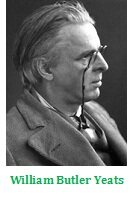
The Nobel Prize in Literature 1923 was awarded to William Butler Yeats "for his always inspired poetry, which in a highly artistic form gives expression to the spirit of a whole nation".
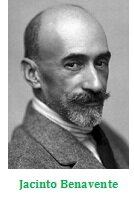
The Nobel Prize in Literature 1922 was awarded to Jacinto Benavente "for the happy manner in which he has continued the illustrious traditions of the Spanish drama".
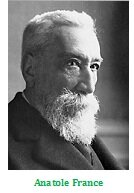
The Nobel Prize in Literature 1921 was awarded to Anatole France "in recognition of his brilliant literary achievements, characterized as they are by a nobility of style, a profound human sympathy, grace, and a true Gallic temperament".
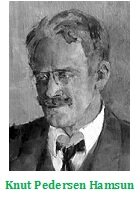
The Nobel Prize in Literature 1920 was awarded to Knut Hamsun "for his monumental work, Growth of the Soil".
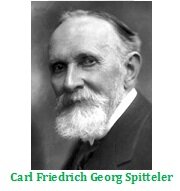
"Special appreciation of his epic, Olympian Spring"
No Nobel Prize was awarded this year. The prize money was allocated to the Special Fund of this prize section.
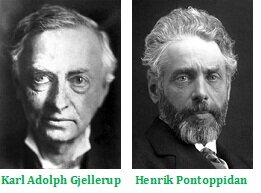
"Varied and rich poetry, which is inspired by lofty ideals" "Authentic descriptions of present-day life in Denmark"
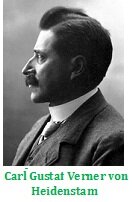
"Recognition of his significance as the leading representative of a new era in our literature"
"As a tribute to the lofty idealism of his literary production and to the sympathy and love of truth with which he has described different types of human beings"
No Nobel Prize was awarded this year. The prize money was allocated to the Special Fund of this prize section.
"Profoundly sensitive, fresh and beautiful verse, by which, with consummate skill, he has made his poetic thought, expressed in his own English words, a part of the literature of the West"
"primarily in recognition of his fruitful, varied and outstanding production in the realm of dramatic art"
"As a tribute to the consummate artistry, permeated with idealism, which he has demonstrated during his long productive career as a lyric poet, dramatist, novelist and writer of world-renowned short stories"
"in appreciation of the lofty idealism, vivid imagination and spiritual perception that characterize her writings"
"in recognition of his earnest search for truth, his penetrating power of thought, his wide range of vision, and the warmth and strength in presentation with which in his numerous works he has vindicated and developed an idealistic philosophy of life"
"in consideration of the power of observation, originality of imagination, virility of ideas and remarkable talent for narration which characterize the creations of this world-famous author"
"Learning and critical research, but above all as a tribute to the creative energy, freshness of style, and lyrical force which characterize his poetic masterpieces"
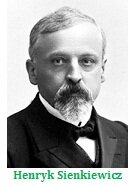
The Nobel Prize in Literature 1905 was awarded to Henryk Sienkiewicz "because of his outstanding merits as an epic writer".
"In recognition of the fresh originality and true inspiration of his poetic production, which faithfully reflects the natural scenery and native spirit of his people, and, in addition, his significant work as a Provençal philologist" "Recognition of the numerous and brilliant compositions which, in an individual and original manner, have revived the great traditions of the Spanish drama"
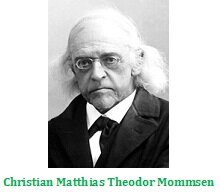
The Nobel Prize in Literature 1902 was awarded to Theodor Mommsen "the greatest living master of the art of historical writing, with special reference to his monumental work, A history of Rome".
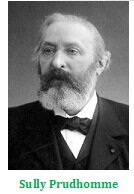
The Nobel Prize in Literature 1901 was awarded to Sully Prudhomme "in special recognition of his poetic composition, which gives evidence of lofty idealism, artistic perfection and a rare combination of the qualities of both heart and intellect".
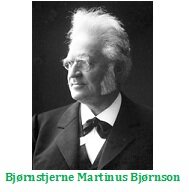
The Nobel Prize in Literature 1903 was awarded to Bjørnstjerne Bjørnson "as a tribute to his noble, magnificent and versatile poetry, which has always been distinguished by both the freshness of its inspiration and the rare purity of its spirit".
No Nobel Prize was awarded this year. The prize money was allocated to the Special Fund of this prize section.
No Nobel Prize was awarded this year. The prize money was allocated to the Special Fund of this prize section.
No Nobel Prize was awarded this year. The prize money was allocated to the Special Fund of this prize section.
The Nobel Prize in Physiology or Medicine 1928 was awarded to Charles Nicolle "for his work on typhus".
The Nobel Prize in Physiology or Medicine 1927 was awarded to Julius Wagner-Jauregg "for his discovery of the therapeutic value of malaria inoculation in the treatment of dementia paralytica".
The Nobel Prize in Physiology or Medicine 1926 was awarded to Johannes Fibiger "for his discovery of the Spiroptera carcinoma".
No Nobel Prize was awarded this year. The prize money was allocated to the Special Fund of this prize section.
No Nobel Prize was awarded this year. The prize money was allocated to the Special Fund of this prize section.
The Nobel Prize in Physiology or Medicine 1924 was awarded to Willem Einthoven "for his discovery of the mechanism of the electrocardiogram".
The Nobel Prize in Physiology or Medicine 1923 was awarded jointly to Frederick Grant Banting and John James Rickard Macleod "for the discovery of insulin"
The Nobel Prize in Physiology or Medicine 1922 was divided equally between Archibald Vivian Hill "for his discovery relating to the production of heat in the muscle" and Otto Fritz Meyerhof "for his discovery of the fixed relationship between the consumption of oxygen and the metabolism of lactic acid in the muscle".
The Nobel Prize in Physiology or Medicine 1920 was awarded to August Krogh "for his discovery of the capillary motor regulating mechanism".
The Nobel Prize in Physiology or Medicine 1919 was awarded to Jules Bordet "for his discoveries relating to immunity".
No Nobel Prize was awarded this year. The prize money was allocated to the Special Fund of this prize section.
No Nobel Prize was awarded this year. The prize money was allocated to the Special Fund of this prize section.
No Nobel Prize was awarded this year. The prize money was allocated to the Special Fund of this prize section.
No Nobel Prize was awarded this year. The prize money was allocated to the Special Fund of this prize section.
The Nobel Prize in Physiology or Medicine 1914 was awarded to Robert Bárány "for his work on the physiology and pathology of the vestibular apparatus".
The Nobel Prize in Physiology or Medicine 1913 was awarded to Charles Richet "in recognition of his work on anaphylaxis".
The Nobel Prize in Physiology or Medicine 1912 was awarded to Alexis Carrel "in recognition of his work on vascular suture and the transplantation of blood vessels and organs".
The Nobel Prize in Physiology or Medicine 1911 was awarded to Allvar Gullstrand "for his work on the dioptrics of the eye".
The Nobel Prize in Physiology or Medicine 1910 was awarded to Albrecht Kossel "in recognition of the contributions to our knowledge of cell chemistry made through his work on proteins, including the nucleic substances".
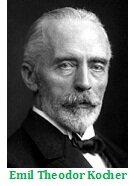
The Nobel Prize in Physiology or Medicine 1909 was awarded to Theodor Kocher "for his work on the physiology, pathology and surgery of the thyroid gland".
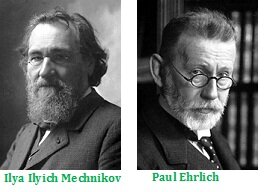
The Nobel Prize in Physiology or Medicine 1908 was awarded jointly to Ilya Ilyich Mechnikov and Paul Ehrlich "in recognition of their work on immunity"
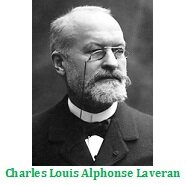
The Nobel Prize in Physiology or Medicine 1907 was awarded to Alphonse Laveran "in recognition of his work on the role played by protozoa in causing diseases".
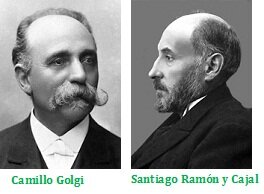
The Nobel Prize in Physiology or Medicine 1906 was awarded jointly to Camillo Golgi and Santiago Ramón y Cajal "in recognition of their work on the structure of the nervous system"
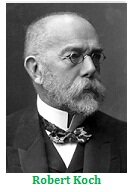
The Nobel Prize in Physiology or Medicine 1905 was awarded to Robert Koch "for his investigations and discoveries in relation to tuberculosis".
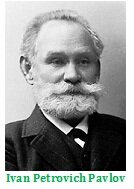
The Nobel Prize in Physiology or Medicine 1904 was awarded to Ivan Pavlov "in recognition of his work on the physiology of digestion, through which knowledge on vital aspects of the subject has been transformed and enlarged".
The Nobel Prize in Physiology or Medicine 1903 was awarded to Niels Ryberg Finsen "in recognition of his contribution to the treatment of diseases, especially lupus vulgaris, with concentrated light radiation, whereby he has opened a new avenue for medical science".
The Nobel Prize in Physiology or Medicine 1902 was awarded to Ronald Ross "for his work on malaria, by which he has shown how it enters the organism and thereby has laid the foundation for successful research on this disease and methods of combating it".
The Nobel Prize in Physiology or Medicine 1901 was awarded to Emil von Behring "for his work on serum therapy, especially its application against diphtheria, by which he has opened a new road in the domain of medical science and thereby placed in the hands of the physician a victorious weapon against illness and deaths".
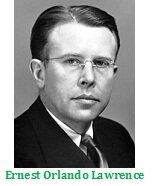
The Nobel Prize in Physics 1939 was awarded to Ernest Lawrence "for the invention and development of the cyclotron and for results obtained with it, especially with regard to artificial radioactive elements".
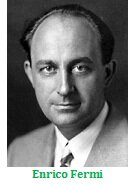
The Nobel Prize in Physics 1938 was awarded to Enrico Fermi "for his demonstrations of the existence of new radioactive elements produced by neutron irradiation, and for his related discovery of nuclear reactions brought about by slow neutrons".
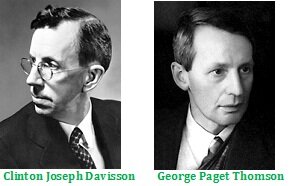
The Nobel Prize in Physics 1937 was awarded jointly to Clinton Joseph Davisson and George Paget Thomson "for their experimental discovery of the diffraction of electrons by crystals"
The Nobel Prize in Physics 1936 was divided equally between Victor Franz Hess "for his discovery of cosmic radiation" and Carl David Anderson "for his discovery of the positron".
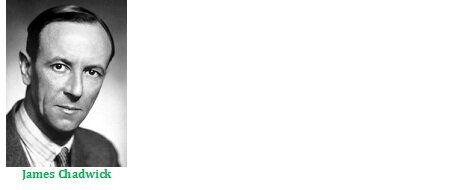
The Nobel Prize in Physics 1935 was awarded to James Chadwick "for the discovery of the neutron".
No Nobel Prize was awarded this year. The prize money was with 1/3 allocated to the Main Fund and with 2/3 to the Special Fund of this prize section.
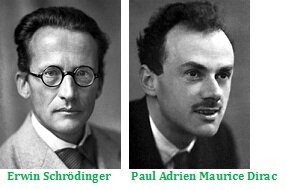
The Nobel Prize in Physics 1933 was awarded jointly to Erwin Schrödinger and Paul Adrien Maurice Dirac "for the discovery of new productive forms of atomic theory"
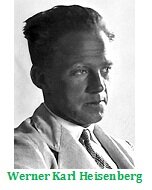
The Nobel Prize in Physics 1932 was awarded to Werner Heisenberg "for the creation of quantum mechanics, the application of which has, inter alia, led to the discovery of the allotropic forms of hydrogen".
No Nobel Prize was awarded this year. The prize money was with 1/3 allocated to the Main Fund and with 2/3 to the Special Fund of this prize section.
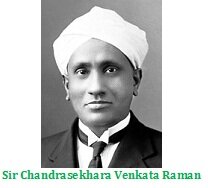
The Nobel Prize in Physics 1930 was awarded to Sir Venkata Raman "for his work on the scattering of light and for the discovery of the effect named after him".
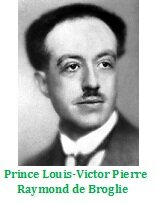
The Nobel Prize in Physics 1929 was awarded to Louis de Broglie "for his discovery of the wave nature of electrons".
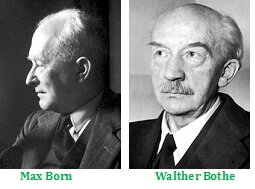
The Nobel Prize in Physics 1954 was divided equally between Max Born "for his fundamental research in quantum mechanics, especially for his statistical interpretation of the wavefunction" and Walther Bothe "for the coincidence method and his discoveries made therewith".
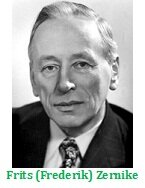
The Nobel Prize in Physics 1953 was awarded to Frits Zernike "for his demonstration of the phase contrast method, especially for his invention of the phase contrast microscope".
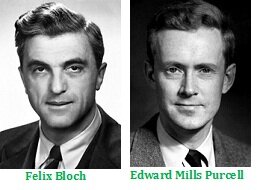
The Nobel Prize in Physics 1952 was awarded jointly to Felix Bloch and Edward Mills Purcell "for their development of new methods for nuclear magnetic precision measurements and discoveries in connection therewith"
The Nobel Prize in Physics 1951 was awarded jointly to Sir John Douglas Cockcroft and Ernest Thomas Sinton Walton "for their pioneer work on the transmutation of atomic nuclei by artificially accelerated atomic particles"
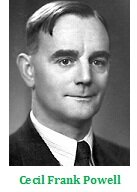
The Nobel Prize in Physics 1950 was awarded to Cecil Powell "for his development of the photographic method of studying nuclear processes and his discoveries regarding mesons made with this method".
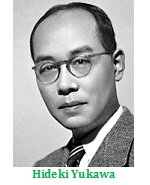
The Nobel Prize in Physics 1949 was awarded to Hideki Yukawa "for his prediction of the existence of mesons on the basis of theoretical work on nuclear forces".
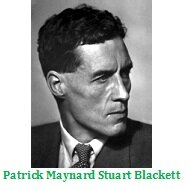
The Nobel Prize in Physics 1948 was awarded to Patrick M.S. Blackett "for his development of the Wilson cloud chamber method, and his discoveries therewith in the fields of nuclear physics and cosmic radiation".
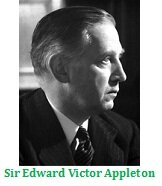
The Nobel Prize in Physics 1947 was awarded to Edward V. Appleton "for his investigations of the physics of the upper atmosphere especially for the discovery of the so-called Appleton layer".
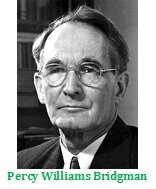
The Nobel Prize in Physics 1946 was awarded to Percy W. Bridgman "for the invention of an apparatus to produce extremely high pressures, and for the discoveries he made therewith in the field of high pressure physics".
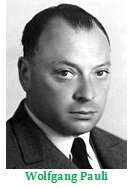
The Nobel Prize in Physics 1945 was awarded to Wolfgang Pauli "for the discovery of the Exclusion Principle, also called the Pauli Principle".
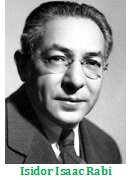
The Nobel Prize in Physics 1944 was awarded to Isidor Isaac Rabi "for his resonance method for recording the magnetic properties of atomic nuclei".
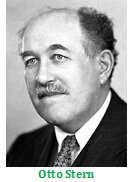
The Nobel Prize in Physics 1943 was awarded to Otto Stern "for his contribution to the development of the molecular ray method and his discovery of the magnetic moment of the proton".
No Nobel Prize was awarded this year. The prize money was with 1/3 allocated to the Main Fund and with 2/3 to the Special Fund of this prize section.
No Nobel Prize was awarded this year. The prize money was with 1/3 allocated to the Main Fund and with 2/3 to the Special Fund of this prize section.
No Nobel Prize was awarded this year. The prize money was with 1/3 allocated to the Main Fund and with 2/3 to the Special Fund of this prize section.
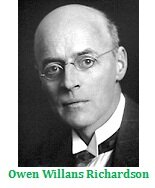
The Nobel Prize in Physics 1928 was awarded to Owen Willans Richardson "for his work on the thermionic phenomenon and especially for the discovery of the law named after him".
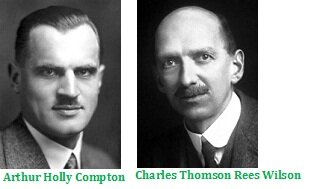
The Nobel Prize in Physics 1927 was divided equally between Arthur Holly Compton "for his discovery of the effect named after him" and Charles Thomson Rees Wilson "for his method of making the paths of electrically charged particles visible by condensation of vapour".
The Nobel Prize in Physics 1926 was awarded to Jean Baptiste Perrin "for his work on the discontinuous structure of matter, and especially for his discovery of sedimentation equilibrium".
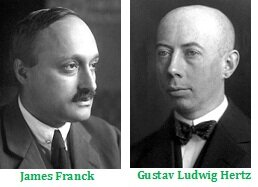
The Nobel Prize in Physics 1925 was awarded jointly to James Franck and Gustav Ludwig Hertz "for their discovery of the laws governing the impact of an electron upon an atom"
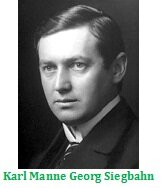
The Nobel Prize in Physics 1924 was awarded to Manne Siegbahn "for his discoveries and research in the field of X-ray spectroscopy".
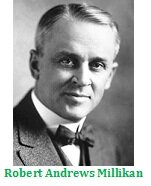
The Nobel Prize in Physics 1923 was awarded to Robert A. Millikan "for his work on the elementary charge of electricity and on the photoelectric effect".
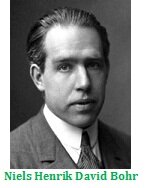
The Nobel Prize in Physics 1922 was awarded to Niels Bohr "for his services in the investigation of the structure of atoms and of the radiation emanating from them".
The Nobel Prize in Physics 1921 was awarded to Albert Einstein "for his services to Theoretical Physics, and especially for his discovery of the law of the photoelectric effect".
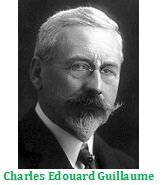
The Nobel Prize in Physics 1920 was awarded to Charles Edouard Guillaume "in recognition of the service he has rendered to precision measurements in Physics by his discovery of anomalies in nickel steel alloys".
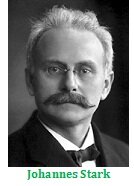
The Nobel Prize in Physics 1919 was awarded to Johannes Stark "for his discovery of the Doppler effect in canal rays and the splitting of spectral lines in electric fields".
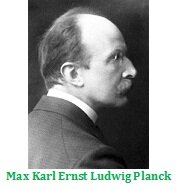
The Nobel Prize in Physics 1918 was awarded to Max Planck "in recognition of the services he rendered to the advancement of Physics by his discovery of energy quanta".
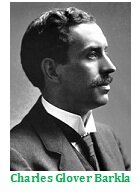
The Nobel Prize in Physics 1917 was awarded to Charles Glover Barkla "for his discovery of the characteristic Röntgen radiation of the elements".
No Nobel Prize was awarded this year. The prize money was with 1/3 allocated to the Main Fund and with 2/3 to the Special Fund of this prize section.
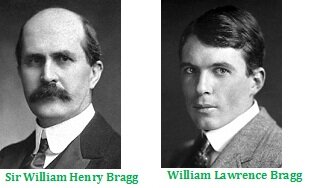
The Nobel Prize in Physics 1915 was awarded jointly to Sir William Henry Bragg and William Lawrence Bragg "for their services in the analysis of crystal structure by means of X-rays"
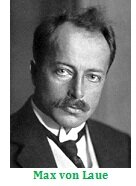
The Nobel Prize in Physics 1914 was awarded to Max von Laue "for his discovery of the diffraction of X-rays by crystals".
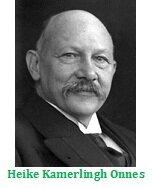
The Nobel Prize in Physics 1913 was awarded to Heike Kamerlingh Onnes "for his investigations on the properties of matter at low temperatures which led, inter alia, to the production of liquid helium".
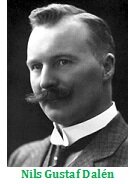
The Nobel Prize in Physics 1912 was awarded to Gustaf Dalén "for his invention of automatic regulators for use in conjunction with gas accumulators for illuminating lighthouses and buoys".
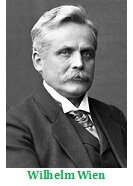
The Nobel Prize in Physics 1911 was awarded to Wilhelm Wien "for his discoveries regarding the laws governing the radiation of heat".
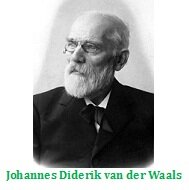
The Nobel Prize in Physics 1910 was awarded to Johannes Diderik van der Waals "for his work on the equation of state for gases and liquids".
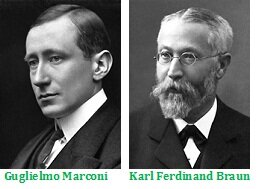
The Nobel Prize in Physics 1909 was awarded jointly to Guglielmo Marconi and Karl Ferdinand Braun "in recognition of their contributions to the development of wireless telegraphy"
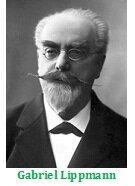
The Nobel Prize in Physics 1908 was awarded to Gabriel Lippmann "for his method of reproducing colours photographically based on the phenomenon of interference".
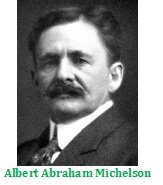
The Nobel Prize in Physics 1907 was awarded to Albert A. Michelson "for his optical precision instruments and the spectroscopic and metrological investigations carried out with their aid".
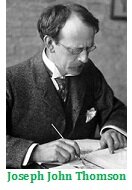
The Nobel Prize in Physics 1906 was awarded to J.J. Thomson "in recognition of the great merits of his theoretical and experimental investigations on the conduction of electricity by gases".
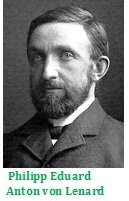
The Nobel Prize in Physics 1905 was awarded to Philipp Lenard "for his work on cathode rays".
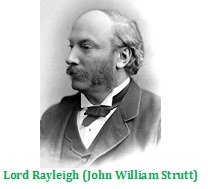
The Nobel Prize in Physics 1904 was awarded to Lord Rayleigh "for his investigations of the densities of the most important gases and for his discovery of argon in connection with these studies".
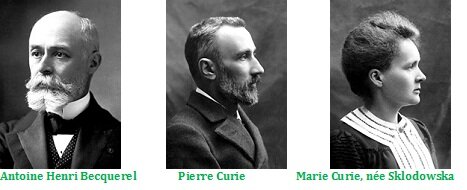
The Nobel Prize in Physics 1903 was divided, one half awarded to Antoine Henri Becquerel "in recognition of the extraordinary services he has rendered by his discovery of spontaneous radioactivity", the other half jointly to Pierre Curie and Marie Curie, née Sklodowska "in recognition of the extraordinary services they have rendered by their joint researches on the radiation phenomena discovered by Professor Henri Becquerel".
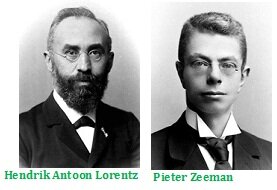
The Nobel Prize in Physics 1902 was awarded jointly to Hendrik Antoon Lorentz and Pieter Zeeman "in recognition of the extraordinary service they rendered by their researches into the influence of magnetism upon radiation phenomena"
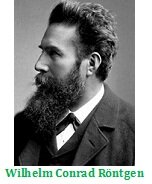
The Nobel Prize in Physics 1901 was awarded to Wilhelm Conrad Röntgen "in recognition of the extraordinary services he has rendered by the discovery of the remarkable rays subsequently named after him".
The Nobel Prize in Physics 1966 was awarded to Alfred Kastler "for the discovery and development of optical methods for studying Hertzian resonances in atoms".
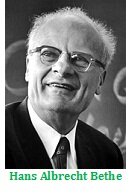
The Nobel Prize in Physics 1967 was awarded to Hans Bethe "for his contributions to the theory of nuclear reactions, especially his discoveries concerning the energy production in stars".
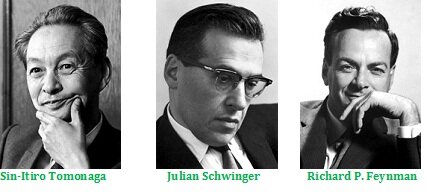
The Nobel Prize in Physics 1965 was awarded jointly to Sin-Itiro Tomonaga, Julian Schwinger and Richard P. Feynman "for their fundamental work in quantum electrodynamics, with deep-ploughing consequences for the physics of elementary particles".
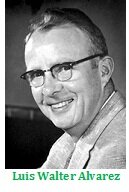
The Nobel Prize in Physics 1968 was awarded to Luis Alvarez "for his decisive contributions to elementary particle physics, in particular the discovery of a large number of resonance states, made possible through his development of the technique of using hydrogen bubble chamber and data analysis".
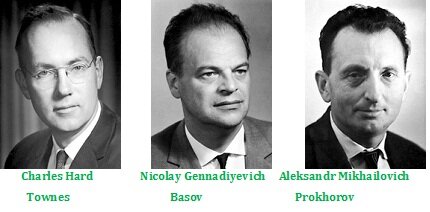
The Nobel Prize in Physics 1964 was divided, one half awarded to Charles Hard Townes, the other half jointly to Nicolay Gennadiyevich Basov and Aleksandr Mikhailovich Prokhorov "for fundamental work in the field of quantum electronics, which has led to the construction of oscillators and amplifiers based on the maser-laser principle".
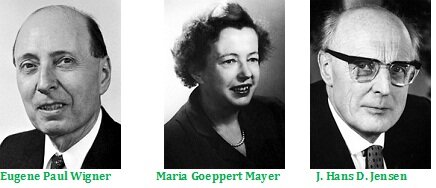
The Nobel Prize in Physics 1963 was divided, one half awarded to Eugene Paul Wigner "for his contributions to the theory of the atomic nucleus and the elementary particles, particularly through the discovery and application of fundamental symmetry principles", the other half jointly to Maria Goeppert Mayer and J. Hans D. Jensen "for their discoveries concerning nuclear shell structure".
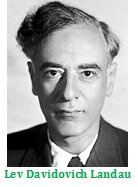
The Nobel Prize in Physics 1962 was awarded to Lev Landau "for his pioneering theories for condensed matter, especially liquid helium".
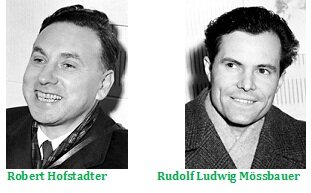
The Nobel Prize in Physics 1961 was divided equally between Robert Hofstadter "for his pioneering studies of electron scattering in atomic nuclei and for his thereby achieved discoveries concerning the structure of the nucleons" and Rudolf Ludwig Mössbauer "for his researches concerning the resonance absorption of gamma radiation and his discovery in this connection of the effect which bears his name".
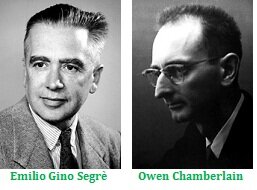
The Nobel Prize in Physics 1959 was awarded jointly to Emilio Gino Segrè and Owen Chamberlain "for their discovery of the antiproton"
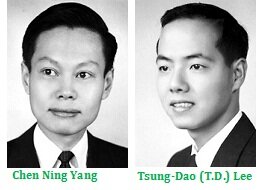
The Nobel Prize in Physics 1957 was awarded jointly to Chen Ning Yang and Tsung-Dao (T.D.) Lee "for their penetrating investigation of the so-called parity laws which has led to important discoveries regarding the elementary particles"
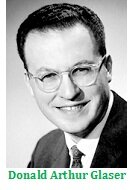
The Nobel Prize in Physics 1960 was awarded to Donald A. Glaser "for the invention of the bubble chamber".
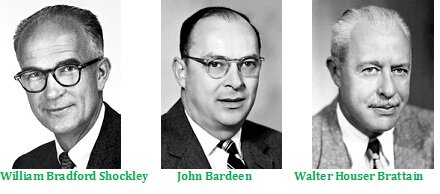
The Nobel Prize in Physics 1956 was awarded jointly to William Bradford Shockley, John Bardeen and Walter Houser Brattain "for their researches on semiconductors and their discovery of the transistor effect".
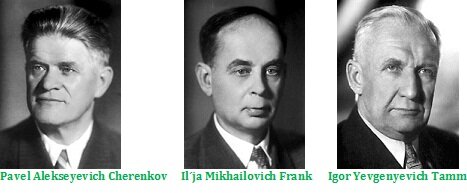
The Nobel Prize in Physics 1958 was awarded jointly to Pavel Alekseyevich Cherenkov, Il´ja Mikhailovich Frank and Igor Yevgenyevich Tamm "for the discovery and the interpretation of the Cherenkov effect".
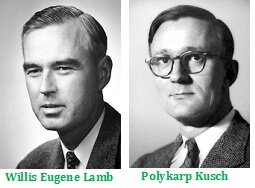
The Nobel Prize in Physics 1955 was divided equally between Willis Eugene Lamb "for his discoveries concerning the fine structure of the hydrogen spectrum" and Polykarp Kusch "for his precision determination of the magnetic moment of the electron".
The Nobel Prize in Physics 1969 was awarded to Murray Gell-Mann "for his contributions and discoveries concerning the classification of elementary particles and their interactions".
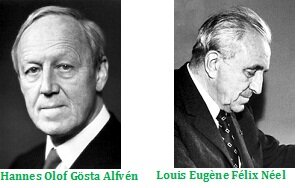
The Nobel Prize in Physics 1970 was divided equally between Hannes Olof Gösta Alfvén "for fundamental work and discoveries in magnetohydro-dynamics with fruitful applications in different parts of plasma physics" and Louis Eugène Félix Néel "for fundamental work and discoveries concerning antiferromagnetism and ferrimagnetism which have led to important applications in solid state physics".
The Nobel Prize in Physics 1971 was awarded to Dennis Gabor "for his invention and development of the holographic method".
The Nobel Prize in Physics 1972 was awarded jointly to John Bardeen, Leon Neil Cooper and John Robert Schrieffer "for their jointly developed theory of superconductivity, usually called the BCS-theory".
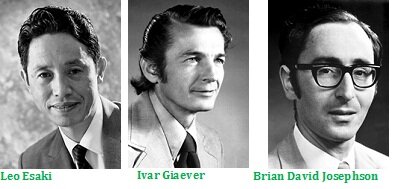
The Nobel Prize in Physics 1973 was divided, one half jointly to Leo Esaki and Ivar Giaever "for their experimental discoveries regarding tunneling phenomena in semiconductors and superconductors, respectively" and the other half to Brian David Josephson "for his theoretical predictions of the properties of a supercurrent through a tunnel barrier, in particular those phenomena which are generally known as the Josephson effects".
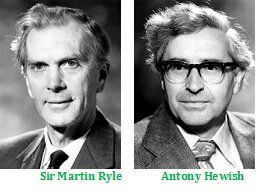
The Nobel Prize in Physics 1974 was awarded jointly to Sir Martin Ryle and Antony Hewish "for their pioneering research in radio astrophysics: Ryle for his observations and inventions, in particular of the aperture synthesis technique, and Hewish for his decisive role in the discovery of pulsars"
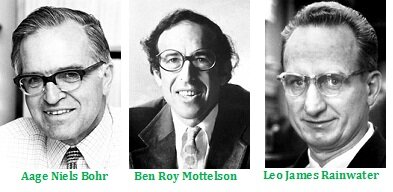
The Nobel Prize in Physics 1975 was awarded jointly to Aage Niels Bohr, Ben Roy Mottelson and Leo James Rainwater "for the discovery of the connection between collective motion and particle motion in atomic nuclei and the development of the theory of the structure of the atomic nucleus based on this connection".
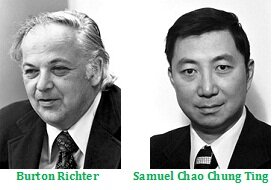
The Nobel Prize in Physics 1976 was awarded jointly to Burton Richter and Samuel Chao Chung Ting "for their pioneering work in the discovery of a heavy elementary particle of a new kind"
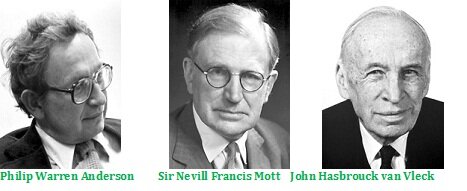
The Nobel Prize in Physics 1977 was awarded jointly to Philip Warren Anderson, Sir Nevill Francis Mott and John Hasbrouck van Vleck "for their fundamental theoretical investigations of the electronic structure of magnetic and disordered systems".
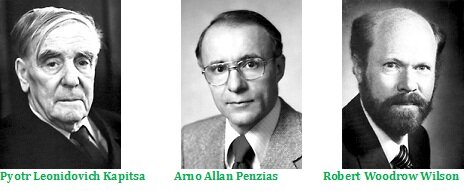
The Nobel Prize in Physics 1978 was divided, one half awarded to Pyotr Leonidovich Kapitsa "for his basic inventions and discoveries in the area of low-temperature physics", the other half jointly to Arno Allan Penzias and Robert Woodrow Wilson "for their discovery of cosmic microwave background radiation".
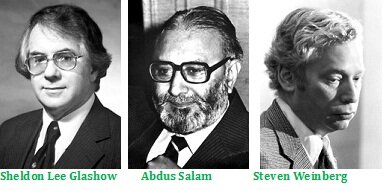
The Nobel Prize in Physics 1979 was awarded jointly to Sheldon Lee Glashow, Abdus Salam and Steven Weinberg "for their contributions to the theory of the unified weak and electromagnetic interaction between elementary particles, including, inter alia, the prediction of the weak neutral current".
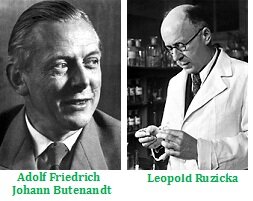
The Nobel Prize in Chemistry 1939 was divided equally between Adolf Friedrich Johann Butenandt "for his work on sex hormones" and Leopold Ruzicka "for his work on polymethylenes and higher terpenes"
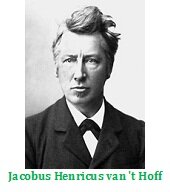
The Nobel Prize in Chemistry 1901 was awarded to Jacobus H. van 't Hoff "in recognition of the extraordinary services he has rendered by the discovery of the laws of chemical dynamics and osmotic pressure in solutions".
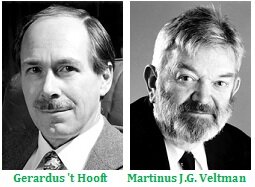
The Nobel Prize in Physics 1999 was awarded jointly to Gerardus 't Hooft and Martinus J.G.
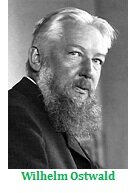
The Nobel Prize in Chemistry 1909 was awarded to Wilhelm Ostwald "in recognition of his work on catalysis and for his investigations into the fundamental principles governing chemical equilibria and rates of reaction".
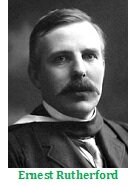
The Nobel Prize in Chemistry 1908 was awarded to Ernest Rutherford "for his investigations into the disintegration of the elements, and the chemistry of radioactive substances".
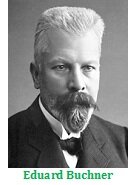
The Nobel Prize in Chemistry 1907 was awarded to Eduard Buchner "for his biochemical researches and his discovery of cell-free fermentation".
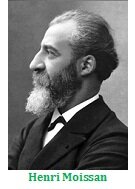
The Nobel Prize in Chemistry 1906 was awarded to Henri Moissan "in recognition of the great services rendered by him in his investigation and isolation of the element fluorine, and for the adoption in the service of science of the electric furnace called after him".
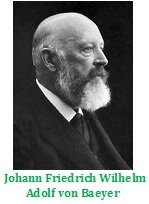
The Nobel Prize in Chemistry 1905 was awarded to Adolf von Baeyer "in recognition of his services in the advancement of organic chemistry and the chemical industry, through his work on organic dyes and hydroaromatic compounds".
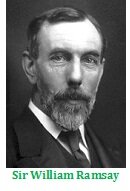
The Nobel Prize in Chemistry 1904 was awarded to Sir William Ramsay "in recognition of his services in the discovery of the inert gaseous elements in air, and his determination of their place in the periodic system".
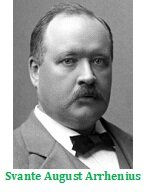
The Nobel Prize in Chemistry 1903 was awarded to Svante Arrhenius "in recognition of the extraordinary services he has rendered to the advancement of chemistry by his electrolytic theory of dissociation".
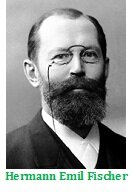
The Nobel Prize in Chemistry 1902 was awarded to Emil Fischer "in recognition of the extraordinary services he has rendered by his work on sugar and purine syntheses".
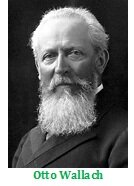
The Nobel Prize in Chemistry 1910 was awarded to Otto Wallach "in recognition of his services to organic chemistry and the chemical industry by his pioneer work in the field of alicyclic compounds".
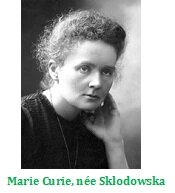
The Nobel Prize in Chemistry 1911 was awarded to Marie Curie "in recognition of her services to the advancement of chemistry by the discovery of the elements radium and polonium, by the isolation of radium and the study of the nature and compounds of this remarkable element".
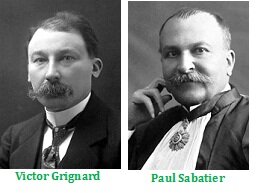
The Nobel Prize in Chemistry 1912 was divided equally between Victor Grignard "for the discovery of the so-called Grignard reagent, which in recent years has greatly advanced the progress of organic chemistry" and Paul Sabatier "for his method of hydrogenating organic compounds in the presence of finely disintegrated metals whereby the progress of organic chemistry has been greatly advanced in recent years".
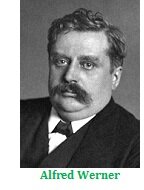
The Nobel Prize in Chemistry 1913 was awarded to Alfred Werner "in recognition of his work on the linkage of atoms in molecules by which he has thrown new light on earlier investigations and opened up new fields of research especially in inorganic chemistry".
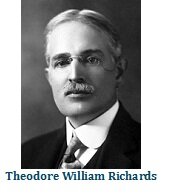
The Nobel Prize in Chemistry 1914 was awarded to Theodore W. Richards "in recognition of his accurate determinations of the atomic weight of a large number of chemical elements".
The Nobel Prize in Chemistry 1915 was awarded to Richard Willstätter "for his researches on plant pigments, especially chlorophyll".
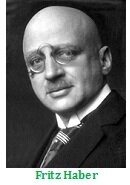
The Nobel Prize in Chemistry 1918 was awarded to Fritz Haber "for the synthesis of ammonia from its elements".
No Nobel Prize was awarded this year. The prize money was allocated to the Special Fund of this prize section.
No Nobel Prize was awarded this year. The prize money was allocated to the Special Fund of this prize section.
No Nobel Prize was awarded this year. The prize money was allocated to the Special Fund of this prize section.
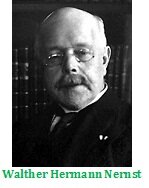
The Nobel Prize in Chemistry 1920 was awarded to Walther Nernst "in recognition of his work in thermochemistry".
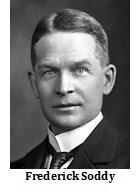
The Nobel Prize in Chemistry 1921 was awarded to Frederick Soddy "for his contributions to our knowledge of the chemistry of radioactive substances, and his investigations into the origin and nature of isotopes".
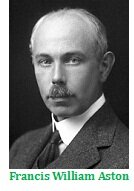
The Nobel Prize in Chemistry 1922 was awarded to Francis W. Aston "for his discovery, by means of his mass spectrograph, of isotopes, in a large number of non-radioactive elements, and for his enunciation of the whole-number rule".
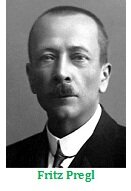
The Nobel Prize in Chemistry 1923 was awarded to Fritz Pregl "for his invention of the method of micro-analysis of organic substances".
No Nobel Prize was awarded this year. The prize money was with 1/3 allocated to the Main Fund and with 2/3 to the Special Fund of this prize section.
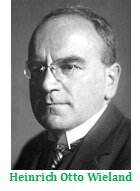
The Nobel Prize in Chemistry 1927 was awarded to Heinrich Wieland "for his investigations of the constitution of the bile acids and related substances".
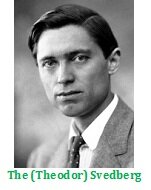
The Nobel Prize in Chemistry 1926 was awarded to The Svedberg "for his work on disperse systems".
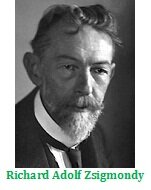
The Nobel Prize in Chemistry 1925 was awarded to Richard Zsigmondy "for his demonstration of the heterogenous nature of colloid solutions and for the methods he used, which have since become fundamental in modern colloid chemistry".
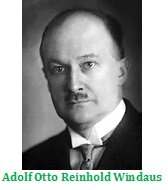
The Nobel Prize in Chemistry 1928 was awarded to Adolf Windaus "for the services rendered through his research into the constitution of the sterols and their connection with the vitamins".
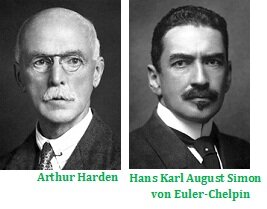
The Nobel Prize in Chemistry 1929 was awarded jointly to Arthur Harden and Hans Karl August Simon von Euler-Chelpin "for their investigations on the fermentation of sugar and fermentative enzymes"
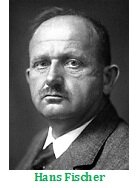
The Nobel Prize in Chemistry 1930 was awarded to Hans Fischer "for his researches into the constitution of haemin and chlorophyll and especially for his synthesis of haemin".
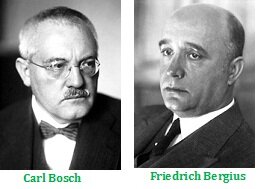
The Nobel Prize in Chemistry 1931 was awarded jointly to Carl Bosch and Friedrich Bergius "in recognition of their contributions to the invention and development of chemical high pressure methods"
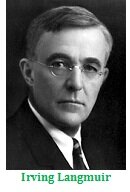
The Nobel Prize in Chemistry 1932 was awarded to Irving Langmuir "for his discoveries and investigations in surface chemistry".
No Nobel Prize was awarded this year. The prize money was with 1/3 allocated to the Main Fund and with 2/3 to the Special Fund of this prize section.
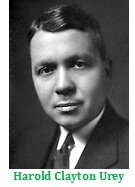
The Nobel Prize in Chemistry 1934 was awarded to Harold C. Urey "for his discovery of heavy hydrogen".
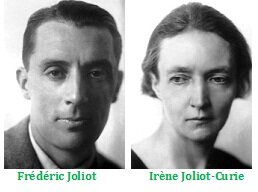
The Nobel Prize in Chemistry 1935 was awarded jointly to Frédéric Joliot and Irène Joliot-Curie "in recognition of their synthesis of new radioactive elements"
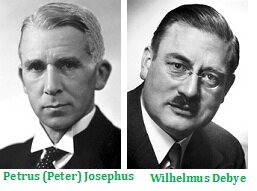
The Nobel Prize in Chemistry 1936 was awarded to Peter Debye "for his contributions to our knowledge of molecular structure through his investigations on dipole moments and on the diffraction of X-rays and electrons in gases".
The Nobel Prize in Chemistry 1937 was divided equally between Walter Norman Haworth "for his investigations on carbohydrates and vitamin C" and Paul Karrer "for his investigations on carotenoids, flavins and vitamins A and B2".
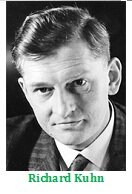
The Nobel Prize in Chemistry 1938 was awarded to Richard Kuhn "for his work on carotenoids and vitamins".
The Nobel Prize in Chemistry 1940 was divided equally between Adolf Friedrich Johann Butenandt "for his work on sex hormones" and Leopold Ruzicka "for his work on polymethylenes and higher terpenes".
No Nobel Prize was awarded this year. The prize money was with 1/3 allocated to the Main Fund and with 2/3 to the Special Fund of this prize section.
No Nobel Prize was awarded this year. The prize money was with 1/3 allocated to the Main Fund and with 2/3 to the Special Fund of this prize section.
No Nobel Prize was awarded this year. The prize money was with 1/3 allocated to the Main Fund and with 2/3 to the Special Fund of this prize section.
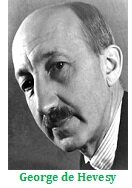
The Nobel Prize in Chemistry 1943 was awarded to George de Hevesy "for his work on the use of isotopes as tracers in the study of chemical processes".
The Nobel Prize in Chemistry 1944 was awarded to Otto Hahn "for his discovery of the fission of heavy nuclei".
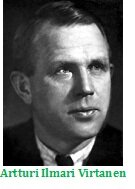
The Nobel Prize in Chemistry 1945 was awarded to Artturi Virtanen "for his research and inventions in agricultural and nutrition chemistry, especially for his fodder preservation method".
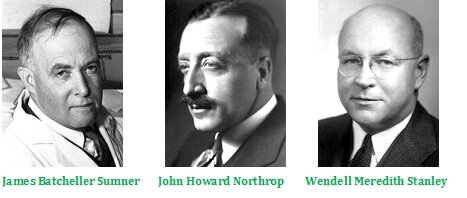
The Nobel Prize in Chemistry 1946 was divided, one half awarded to James Batcheller Sumner "for his discovery that enzymes can be crystallized", the other half jointly to John Howard Northrop and Wendell Meredith Stanley "for their preparation of enzymes and virus proteins in a pure form".
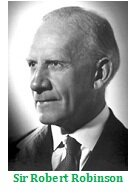
The Nobel Prize in Chemistry 1947 was awarded to Sir Robert Robinson "for his investigations on plant products of biological importance, especially the alkaloids".
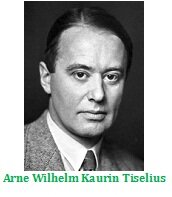
The Nobel Prize in Chemistry 1948 was awarded to Arne Tiselius "for his research on electrophoresis and adsorption analysis, especially for his discoveries concerning the complex nature of the serum proteins".
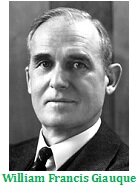
The Nobel Prize in Chemistry 1949 was awarded to William F. Giauque "for his contributions in the field of chemical thermodynamics, particularly concerning the behaviour of substances at extremely low temperatures".
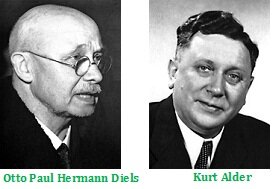
The Nobel Prize in Chemistry 1950 was awarded jointly to Otto Paul Hermann Diels and Kurt Alder "for their discovery and development of the diene synthesis"
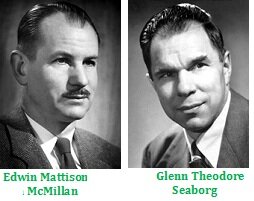
The Nobel Prize in Chemistry 1951 was awarded jointly to Edwin Mattison McMillan and Glenn Theodore Seaborg "for their discoveries in the chemistry of the transuranium elements"
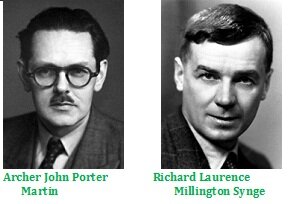
The Nobel Prize in Chemistry 1952 was awarded jointly to Archer John Porter Martin and Richard Laurence Millington Synge "for their invention of partition chromatography"
The Nobel Prize in Chemistry 1953 was awarded to Hermann Staudinger "for his discoveries in the field of macromolecular chemistry".
The Nobel Prize in Chemistry 1954 was awarded to Linus Pauling "for his research into the nature of the chemical bond and its application to the elucidation of the structure of complex substances".
The Nobel Prize in Chemistry 1955 was awarded to Vincent du Vigneaud "for his work on biochemically important sulphur compounds, especially for the first synthesis of a polypeptide hormone".
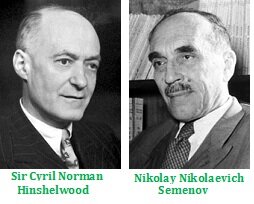
The Nobel Prize in Chemistry 1956 was awarded jointly to Sir Cyril Norman Hinshelwood and Nikolay Nikolaevich Semenov "for their researches into the mechanism of chemical reactions"
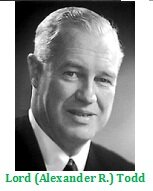
The Nobel Prize in Chemistry 1957 was awarded to Lord Todd "for his work on nucleotides and nucleotide co-enzymes".
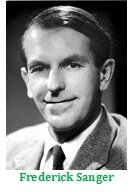
The Nobel Prize in Chemistry 1958 was awarded to Frederick Sanger "for his work on the structure of proteins, especially that of insulin".
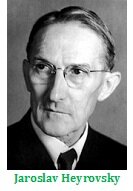
The Nobel Prize in Chemistry 1959 was awarded to Jaroslav Heyrovsky "for his discovery and development of the polarographic methods of analysis".
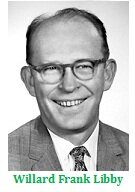
The Nobel Prize in Chemistry 1960 was awarded to Willard F. Libby "for his method to use carbon-14 for age determination in archaeology, geology, geophysics, and other branches of science".
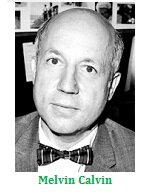
The Nobel Prize in Chemistry 1961 was awarded to Melvin Calvin "for his research on the carbon dioxide assimilation in plants".
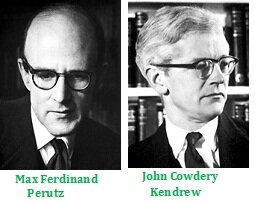
The Nobel Prize in Chemistry 1962 was awarded jointly to Max Ferdinand Perutz and John Cowdery Kendrew "for their studies of the structures of globular proteins"
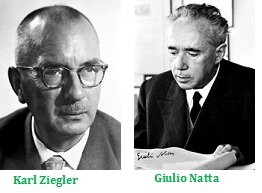
The Nobel Prize in Chemistry 1963 was awarded jointly to Karl Ziegler and Giulio Natta "for their discoveries in the field of the chemistry and technology of high polymers"
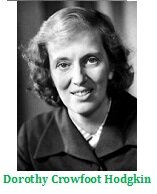
The Nobel Prize in Chemistry 1964 was awarded to Dorothy Crowfoot Hodgkin "for her determinations by X-ray techniques of the structures of important biochemical substances".
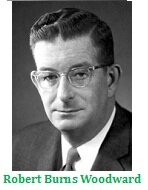
The Nobel Prize in Chemistry 1965 was awarded to Robert B. Woodward "for his outstanding achievements in the art of organic synthesis".
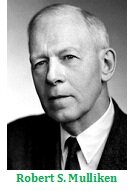
The Nobel Prize in Chemistry 1966 was awarded to Robert S. Mulliken "for his fundamental work concerning chemical bonds and the electronic structure of molecules by the molecular orbital method".
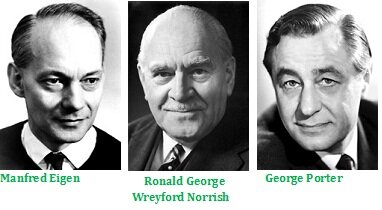
The Nobel Prize in Chemistry 1967 was divided, one half awarded to Manfred Eigen, the other half jointly to Ronald George Wreyford Norrish and George Porter "for their studies of extremely fast chemical reactions, effected by disturbing the equlibrium by means of very short pulses of energy".
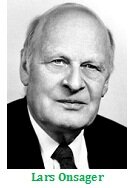
The Nobel Prize in Chemistry 1968 was awarded to Lars Onsager "for the discovery of the reciprocal relations bearing his name, which are fundamental for the thermodynamics of irreversible processes".
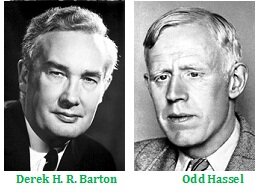
The Nobel Prize in Chemistry 1969 was awarded jointly to Derek H. R. Barton and Odd Hassel "for their contributions to the development of the concept of conformation and its application in chemistry"
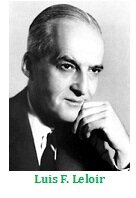
The Nobel Prize in Chemistry 1970 was awarded to Luis Leloir "for his discovery of sugar nucleotides and their role in the biosynthesis of carbohydrates".
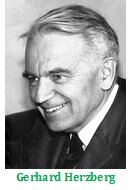
The Nobel Prize in Chemistry 1971 was awarded to Gerhard Herzberg "for his contributions to the knowledge of electronic structure and geometry of molecules, particularly free radicals".
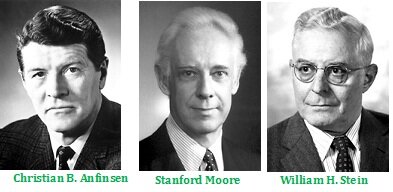
The Nobel Prize in Chemistry 1972 was divided, one half awarded to Christian B. Anfinsen "for his work on ribonuclease, especially concerning the connection between the amino acid sequence and the biologically active conformation", the other half jointly to Stanford Moore and William H. Stein "for their contribution to the understanding of the connection between chemical structure and catalytic activity of the active centre of the ribonuclease molecule".
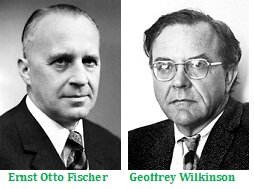
The Nobel Prize in Chemistry 1973 was awarded jointly to Ernst Otto Fischer and Geoffrey Wilkinson "for their pioneering work, performed independently, on the chemistry of the organometallic, so called sandwich compounds"
The Nobel Prize in Chemistry 1974 was awarded to Paul J. Flory "for his fundamental achievements, both theoretical and experimental, in the physical chemistry of the macromolecules".
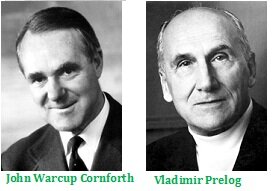
The Nobel Prize in Chemistry 1975 was divided equally between John Warcup Cornforth "for his work on the stereochemistry of enzyme-catalyzed reactions" and Vladimir Prelog "for his research into the stereochemistry of organic molecules and reactions".
The Nobel Prize in Chemistry 1976 was awarded to William Lipscomb "for his studies on the structure of boranes illuminating problems of chemical bonding".
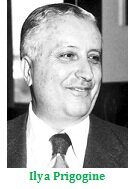
The Nobel Prize in Chemistry 1977 was awarded to Ilya Prigogine "for his contributions to non-equilibrium thermodynamics, particularly the theory of dissipative structures".
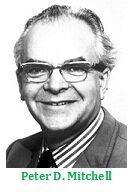
The Nobel Prize in Chemistry 1978 was awarded to Peter Mitchell "for his contribution to the understanding of biological energy transfer through the formulation of the chemiosmotic theory"
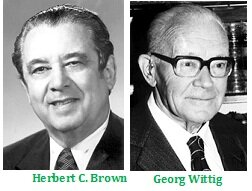
The Nobel Prize in Chemistry 1979 was awarded jointly to Herbert C. Brown and Georg Wittig "for their development of the use of boron- and phosphorus-containing compounds, respectively, into important reagents in organic synthesis"
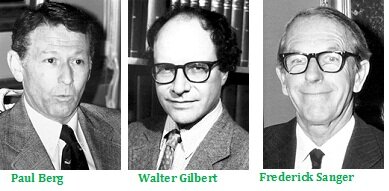
The Nobel Prize in Chemistry 1980 was divided, one half awarded to Paul Berg "for his fundamental studies of the biochemistry of nucleic acids, with particular regard to recombinant-DNA", the other half jointly to Walter Gilbert and Frederick Sanger "for their contributions concerning the determination of base sequences in nucleic acids".
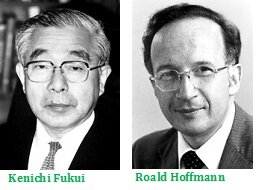
The Nobel Prize in Chemistry 1981 was awarded jointly to Kenichi Fukui and Roald Hoffmann "for their theories, developed independently, concerning the course of chemical reactions"
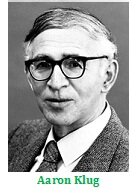
The Nobel Prize in Chemistry 1982 was awarded to Aaron Klug "for his development of crystallographic electron microscopy and his structural elucidation of biologically important nucleic acid-protein complexes".
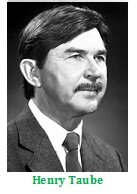
The Nobel Prize in Chemistry 1983 was awarded to Henry Taube "for his work on the mechanisms of electron transfer reactions, especially in metal complexes".
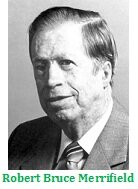
The Nobel Prize in Chemistry 1984 was awarded to Bruce Merrifield "for his development of methodology for chemical synthesis on a solid matrix".
The Nobel Prize in Chemistry 1985 was awarded jointly to Herbert A. Hauptman and Jerome Karle "for their outstanding achievements in the development of direct methods for the determination of crystal structures"
The Nobel Prize in Chemistry 1986 was awarded jointly to Dudley R. Herschbach, Yuan T. Lee and John C. Polanyi "for their contributions concerning the dynamics of chemical elementary processes".
The Nobel Prize in Chemistry 1987 was awarded jointly to Donald J. Cram, Jean-Marie Lehn and Charles J. Pedersen "for their development and use of molecules with structure-specific interactions of high selectivity".
The Nobel Prize in Chemistry 1988 was awarded jointly to Johann Deisenhofer, Robert Huber and Hartmut Michel "for the determination of the three-dimensional structure of a photosynthetic reaction centre"
The Nobel Prize in Chemistry 1989 was awarded jointly to Sidney Altman and Thomas R. Cech "for their discovery of catalytic properties of RNA"
The Nobel Prize in Physics 1980 was awarded jointly to James Watson Cronin and Val Logsdon Fitch "for the discovery of violations of fundamental symmetry principles in the decay of neutral K-mesons"
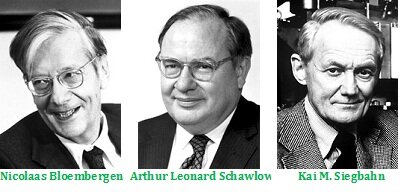
The Nobel Prize in Physics 1981 was divided, one half jointly to Nicolaas Bloembergen and Arthur Leonard Schawlow "for their contribution to the development of laser spectroscopy" and the other half to Kai M. Siegbahn "for his contribution to the development of high-resolution electron spectroscopy".
The Nobel Prize in Physics 1982 was awarded to Kenneth G. Wilson "for his theory for critical phenomena in connection with phase transitions".
The Nobel Prize in Physics 1983 was divided equally between Subramanyan Chandrasekhar "for his theoretical studies of the physical processes of importance to the structure and evolution of the stars" and William Alfred Fowler "for his theoretical and experimental studies of the nuclear reactions of importance in the formation of the chemical elements in the universe".
The Nobel Prize in Physics 1984 was awarded jointly to Carlo Rubbia and Simon van der Meer "for their decisive contributions to the large project, which led to the discovery of the field particles W and Z, communicators of weak interaction"
The Nobel Prize in Physics 1985 was awarded to Klaus von Klitzing "for the discovery of the quantized Hall effect".
The Nobel Prize in Physics 1986 was divided, one half awarded to Ernst Ruska "for his fundamental work in electron optics, and for the design of the first electron microscope", the other half jointly to Gerd Binnig and Heinrich Rohrer "for their design of the scanning tunneling microscope".
The Nobel Prize in Physics 1987 was awarded jointly to J. Georg Bednorz and K. Alexander Müller "for their important break-through in the discovery of superconductivity in ceramic materials"
The Nobel Prize in Physics 1988 was awarded jointly to Leon M. Lederman, Melvin Schwartz and Jack Steinberger "for the neutrino beam method and the demonstration of the doublet structure of the leptons through the discovery of the muon neutrino".
The Nobel Prize in Physics 1989 was divided, one half awarded to Norman F. Ramsey "for the invention of the separated oscillatory fields method and its use in the hydrogen maser and other atomic clocks", the other half jointly to Hans G. Dehmelt and Wolfgang Paul "for the development of the ion trap technique".
The Nobel Prize in Physics 1990 was awarded jointly to Jerome I. Friedman, Henry W. Kendall and Richard E. Taylor "for their pioneering investigations concerning deep inelastic scattering of electrons on protons and bound neutrons, which have been of essential importance for the development of the quark model in particle physics".
The Nobel Prize in Chemistry 1990 was awarded to Elias James Corey "for his development of the theory and methodology of organic synthesis".
The Nobel Prize in Chemistry 1991 was awarded to Richard R. Ernst "for his contributions to the development of the methodology of high resolution nuclear magnetic resonance (NMR) spectroscopy".
The Nobel Prize in Chemistry 1992 was awarded to Rudolph A. Marcus "for his contributions to the theory of electron transfer reactions in chemical systems".
The Nobel Prize in Chemistry 1993 was awarded "for contributions to the developments of methods within DNA-based chemistry" jointly with one half to Kary B. Mullis "for his invention of the polymerase chain reaction (PCR) method" and with one half to Michael Smith "for his fundamental contributions to the establishment of oligonucleotide-based, site-directed mutagenesis and its development for protein studies".
The Nobel Prize in Chemistry 1994 was awarded to George A. Olah "for his contribution to carbocation chemistry".
The Nobel Prize in Chemistry 1995 was awarded jointly to Paul J. Crutzen, Mario J. Molina and F. Sherwood Rowland "for their work in atmospheric chemistry, particularly concerning the formation and decomposition of ozone".
The Nobel Prize in Chemistry 1996 was awarded jointly to Robert F. Curl Jr., Sir Harold W. Kroto and Richard E. Smalley "for their discovery of fullerenes".
The Nobel Prize in Chemistry 1997 was divided, one half jointly to Paul D. Boyer and John E. Walker "for their elucidation of the enzymatic mechanism underlying the synthesis of adenosine triphosphate (ATP)" and the other half to Jens C. Skou "for the first discovery of an ion-transporting enzyme, Na+, K+ -ATPase".
The Nobel Prize in Chemistry 1998 was divided equally between Walter Kohn "for his development of the density-functional theory" and John A. Pople "for his development of computational methods in quantum chemistry".
The Nobel Prize in Chemistry 1999 was awarded to Ahmed Zewail "for his studies of the transition states of chemical reactions using femtosecond spectroscopy".
The Nobel Prize in Chemistry 2000 was awarded jointly to Alan J. Heeger, Alan G. MacDiarmid and Hideki Shirakawa "for the discovery and development of conductive polymers".
The Nobel Prize in Physics 1991 was awarded to Pierre-Gilles de Gennes "for discovering that methods developed for studying order phenomena in simple systems can be generalized to more complex forms of matter, in particular to liquid crystals and polymers".
The Nobel Prize in Physics 1992 was awarded to Georges Charpak "for his invention and development of particle detectors, in particular the multiwire proportional chamber".
The Nobel Prize in Physics 1993 was awarded jointly to Russell A. Hulse and Joseph H. Taylor Jr. "for the discovery of a new type of pulsar, a discovery that has opened up new possibilities for the study of gravitation"
The Nobel Prize in Physics 1994 was awarded "for pioneering contributions to the development of neutron scattering techniques for studies of condensed matter" jointly with one half to Bertram N. Brockhouse "for the development of neutron spectroscopy" and with one half to Clifford G. Shull "for the development of the neutron diffraction technique".
The Nobel Prize in Physics 1995 was awarded "for pioneering experimental contributions to lepton physics" jointly with one half to Martin L. Perl "for the discovery of the tau lepton" and with one half to Frederick Reines "for the detection of the neutrino".
The Nobel Prize in Physics 1996 was awarded jointly to David M. Lee, Douglas D. Osheroff and Robert C. Richardson "for their discovery of superfluidity in helium-3".
The Nobel Prize in Physics 1997 was awarded jointly to Steven Chu, Claude Cohen-Tannoudji and William D. Phillips "for development of methods to cool and trap atoms with laser light".
The Nobel Prize in Physics 1998 was awarded jointly to Robert B. Laughlin, Horst L. Störmer and Daniel C. Tsui "for their discovery of a new form of quantum fluid with fractionally charged excitations".
The Nobel Prize in Physics 2000 was awarded "for basic work on information and communication technology" with one half jointly to Zhores I. Alferov and Herbert Kroemer "for developing semiconductor heterostructures used in high-speed- and opto-electronics" and the other half to Jack S. Kilby "for his part in the invention of the integrated circuit".
The Nobel Prize in Chemistry 2001 was divided, one half jointly to William S. Knowles and Ryoji Noyori "for their work on chirally catalysed hydrogenation reactions" and the other half to K. Barry Sharpless "for his work on chirally catalysed oxidation reactions".
The Nobel Prize in Chemistry 2002 was awarded "for the development of methods for identification and structure analyses of biological macromolecules" with one half jointly to John B. Fenn and Koichi Tanaka "for their development of soft desorption ionisation methods for mass spectrometric analyses of biological macromolecules" and the other half to Kurt Wüthrich "for his development of nuclear magnetic resonance spectroscopy for determining the three-dimensional structure of biological macromolecules in solution".
The Nobel Prize in Chemistry 2003 was awarded "for discoveries concerning channels in cell membranes" jointly with one half to Peter Agre "for the discovery of water channels" and with one half to Roderick MacKinnon "for structural and mechanistic studies of ion channels".
The Nobel Prize in Chemistry 2004 was awarded jointly to Aaron Ciechanover, Avram Hershko and Irwin Rose "for the discovery of ubiquitin-mediated protein degradation".
The Nobel Prize in Chemistry 2005 was awarded jointly to Yves Chauvin, Robert H. Grubbs and Richard R. Schrock "for the development of the metathesis method in organic synthesis".
The Nobel Prize in Chemistry 2006 was awarded to Roger D. Kornberg "for his studies of the molecular basis of eukaryotic transcription".
The Nobel Prize in Chemistry 2007 was awarded to Gerhard Ertl "for his studies of chemical processes on solid surfaces".
The Nobel Prize in Chemistry 2008 was awarded jointly to Osamu Shimomura, Martin Chalfie and Roger Y. Tsien "for the discovery and development of the green fluorescent protein, GFP".
The Nobel Prize in Chemistry 2009 was awarded jointly to Venkatraman Ramakrishnan, Thomas A. Steitz and Ada E. Yonath "for studies of the structure and function of the ribosome".
The Nobel Prize in Chemistry 2010 was awarded jointly to Richard F. Heck, Ei-ichi Negishi and Akira Suzuki "for palladium-catalyzed cross couplings in organic synthesis".
The Nobel Prize in Chemistry 2011 was awarded to Dan Shechtman "for the discovery of quasicrystals".
The Nobel Prize in Physics 2001 was awarded jointly to Eric A. Cornell, Wolfgang Ketterle and Carl E. Wieman "for the achievement of Bose-Einstein condensation in dilute gases of alkali atoms, and for early fundamental studies of the properties of the condensates"
The Nobel Prize in Physics 2002 was divided, one half jointly to Raymond Davis Jr. and Masatoshi Koshiba "for pioneering contributions to astrophysics, in particular for the detection of cosmic neutrinos" and the other half to Riccardo Giacconi "for pioneering contributions to astrophysics, which have led to the discovery of cosmic X-ray sources".
The Nobel Prize in Physics 2003 was awarded jointly to Alexei A. Abrikosov, Vitaly L. Ginzburg and Anthony J. Leggett "for pioneering contributions to the theory of superconductors and super fluids".
The Nobel Prize in Physics 2004 was awarded jointly to David J. Gross, H. David Politzer and Frank Wilczek "for the discovery of asymptotic freedom in the theory of the strong interaction".
The Nobel Prize in Physics 2005 was divided, one half awarded to Roy J. Glauber "for his contribution to the quantum theory of optical coherence", the other half jointly to John L. Hall and Theodor W. Hänsch "for their contributions to the development of laser-based precision spectroscopy, including the optical frequency comb technique".
The Nobel Prize in Physics 2006 was awarded jointly to John C. Mather and George F. Smoot "for their discovery of the blackbody form and anisotropy of the cosmic microwave background radiation"
The Nobel Prize in Physics 2007 was awarded jointly to Albert Fert and Peter Grünberg "for the discovery of Giant Magnetoresistance"
The Nobel Prize in Physics 2008 was divided, one half awarded to Yoichiro Nambu "for the discovery of the mechanism of spontaneous broken symmetry in subatomic physics", the other half jointly to Makoto Kobayashi and Toshihide Maskawa "for the discovery of the origin of the broken symmetry which predicts the existence of at least three families of quarks in nature".
The Nobel Prize in Physics 2009 was divided, one half awarded to Charles Kuen Kao "for groundbreaking achievements concerning the transmission of light in fibers for optical communication", the other half jointly to Willard S. Boyle and George E. Smith "for the invention of an imaging semiconductor circuit – the CCD sensor".
The Nobel Prize in Physics 2010 was awarded jointly to Andre Geim and Konstantin Novoselov "for groundbreaking experiments regarding the two-dimensional material graphene"
The Nobel Prize in Physics 2011 was divided; one half awarded to Saul Perlmutter, the other half jointly to Brian P. Schmidt and Adam G. Riess "for the discovery of the accelerating expansion of the Universe through observations of distant supernovae".